Why This Fails Locally
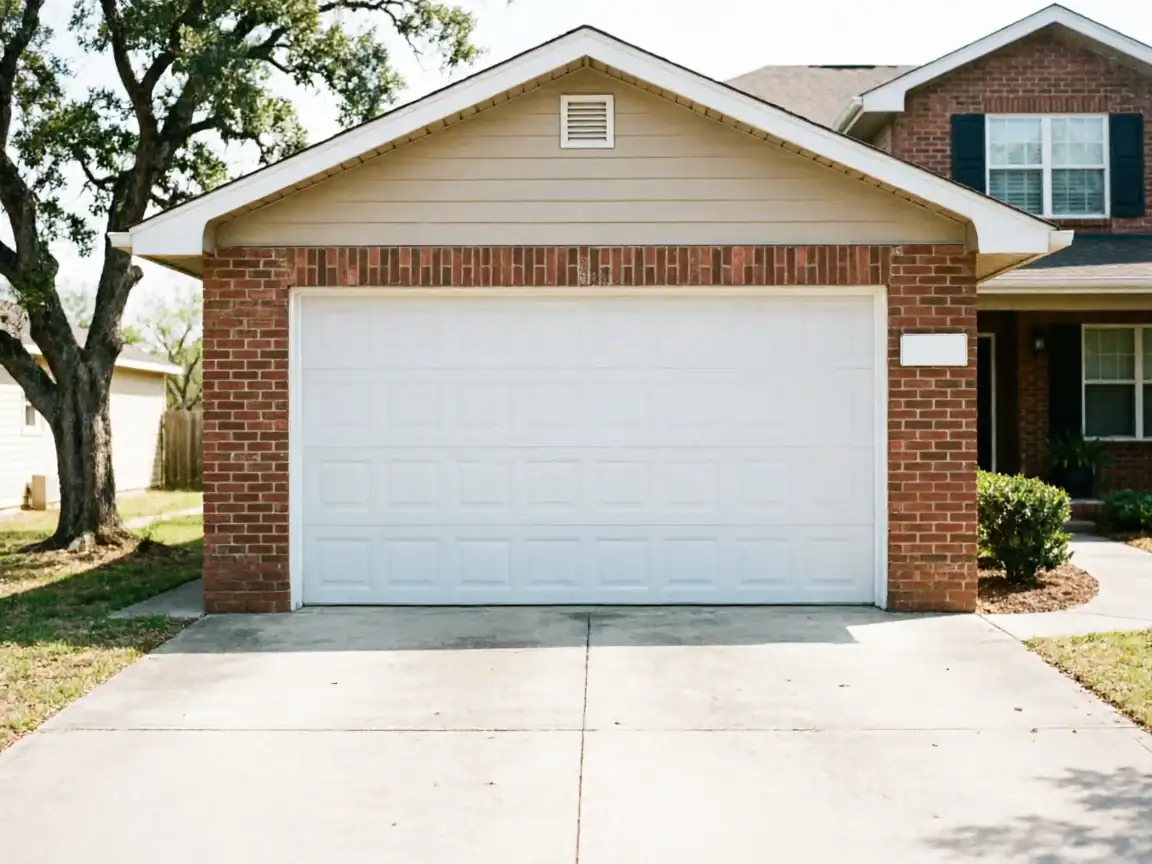
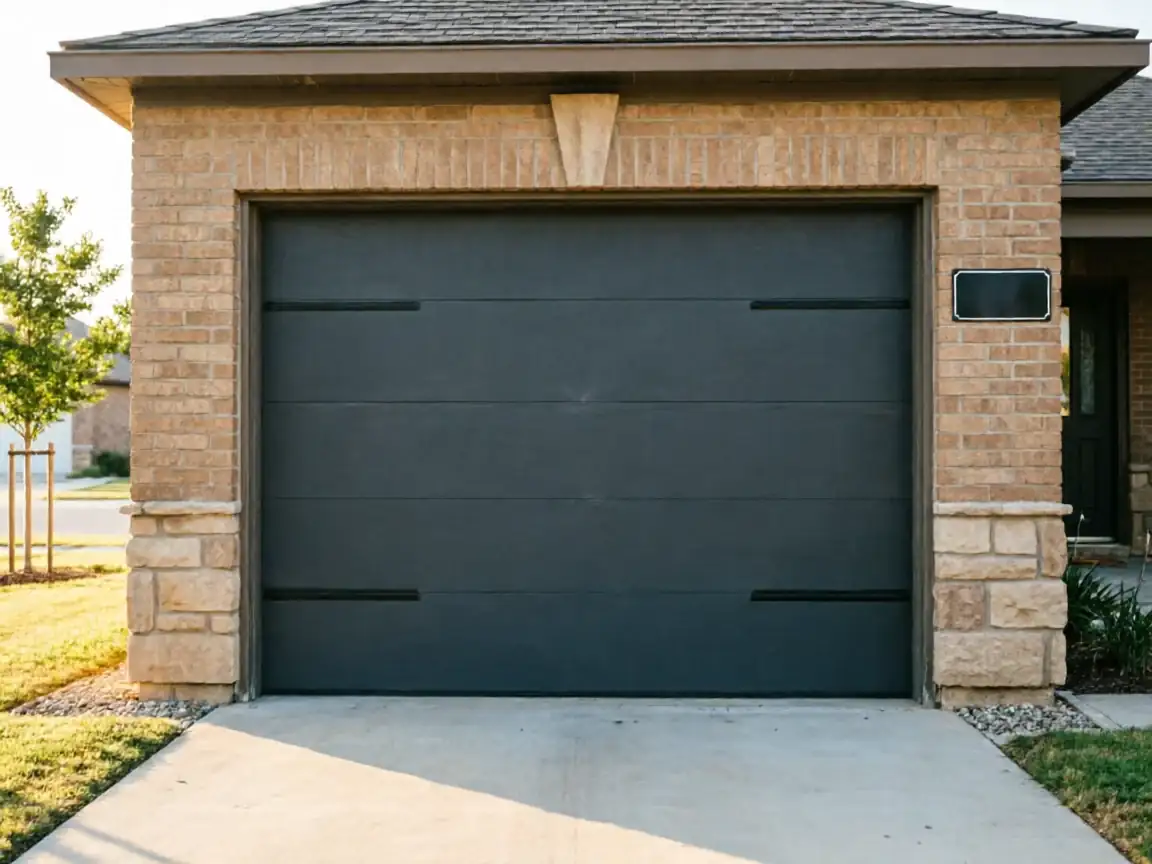
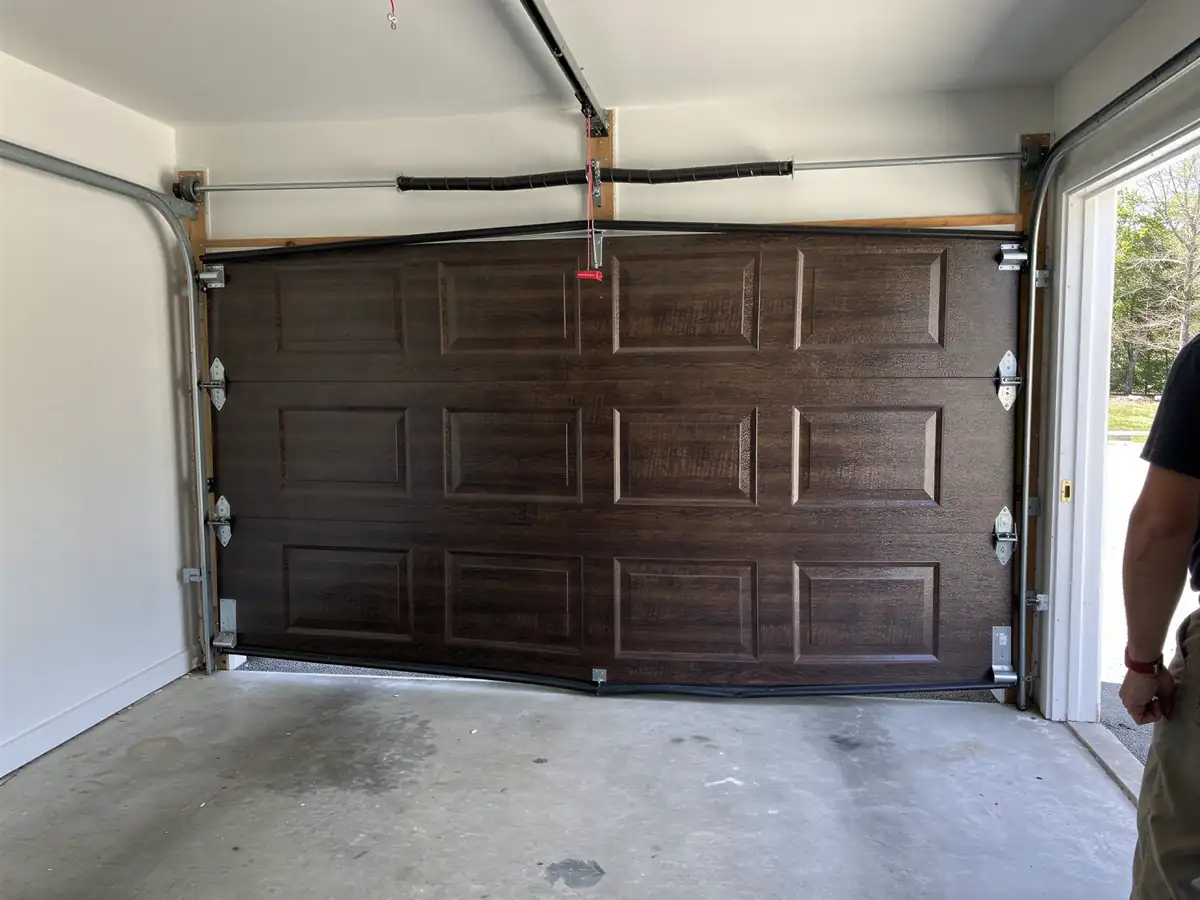
Temple sits in a mild climate band with occasional freezes, not the hard freeze-thaw swings that crack slabs and warp wood doors further north. That changes what actually wears a door out here. It's not ice - it's heat cycling. Steel panels expand in the afternoon sun and contract overnight, and over 20-plus years that repeated flex is what loosens hinges, stresses hardware mounting points, and fatigues springs faster than the rated cycle count would suggest. Original doors from the 1980s and 90s stock weren't built with the insulation or finish coatings that later standards require, so the paint chalks and the steel underneath takes more direct thermal load than a modern door would. None of this means the door fails overnight. It means a door installed when the house was built is working against decades of expansion and contraction it was never specified for, and by the time it's visibly sagging, the track alignment and spring tension have usually been off for a while.
Doing It Yourself
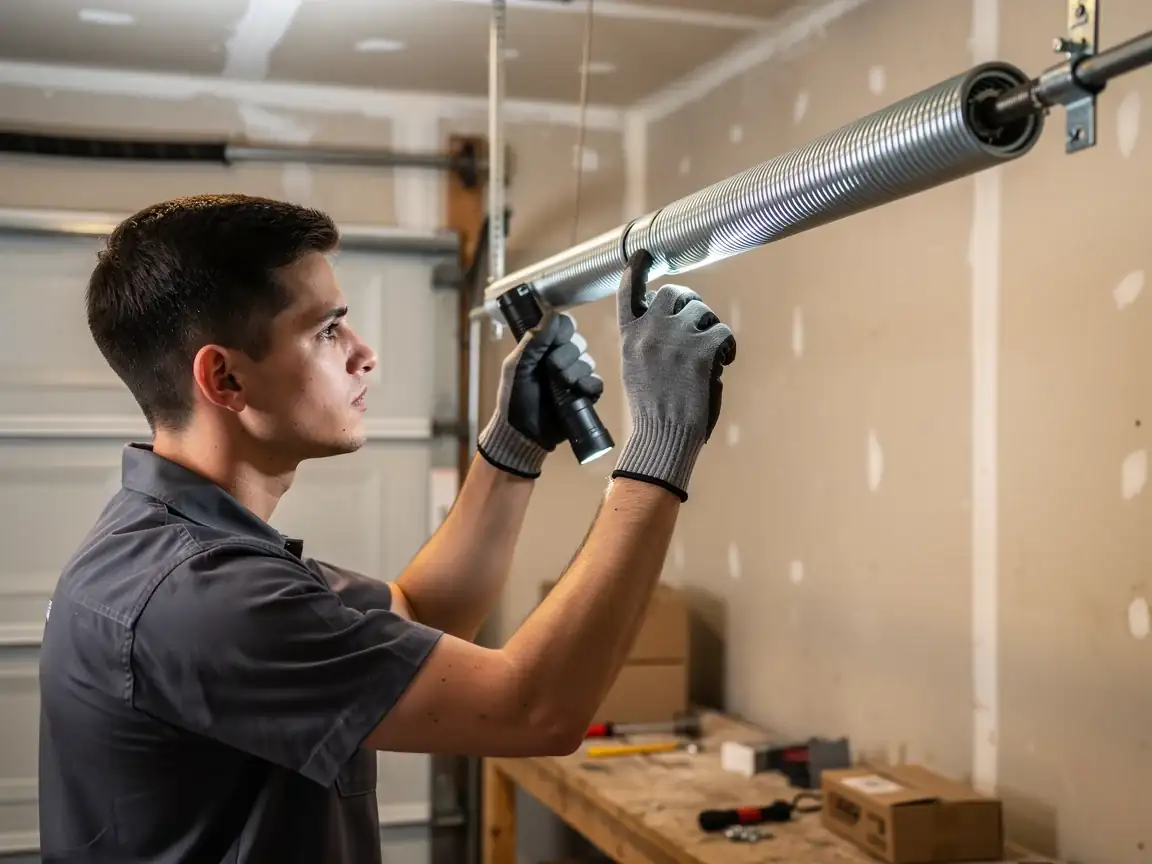
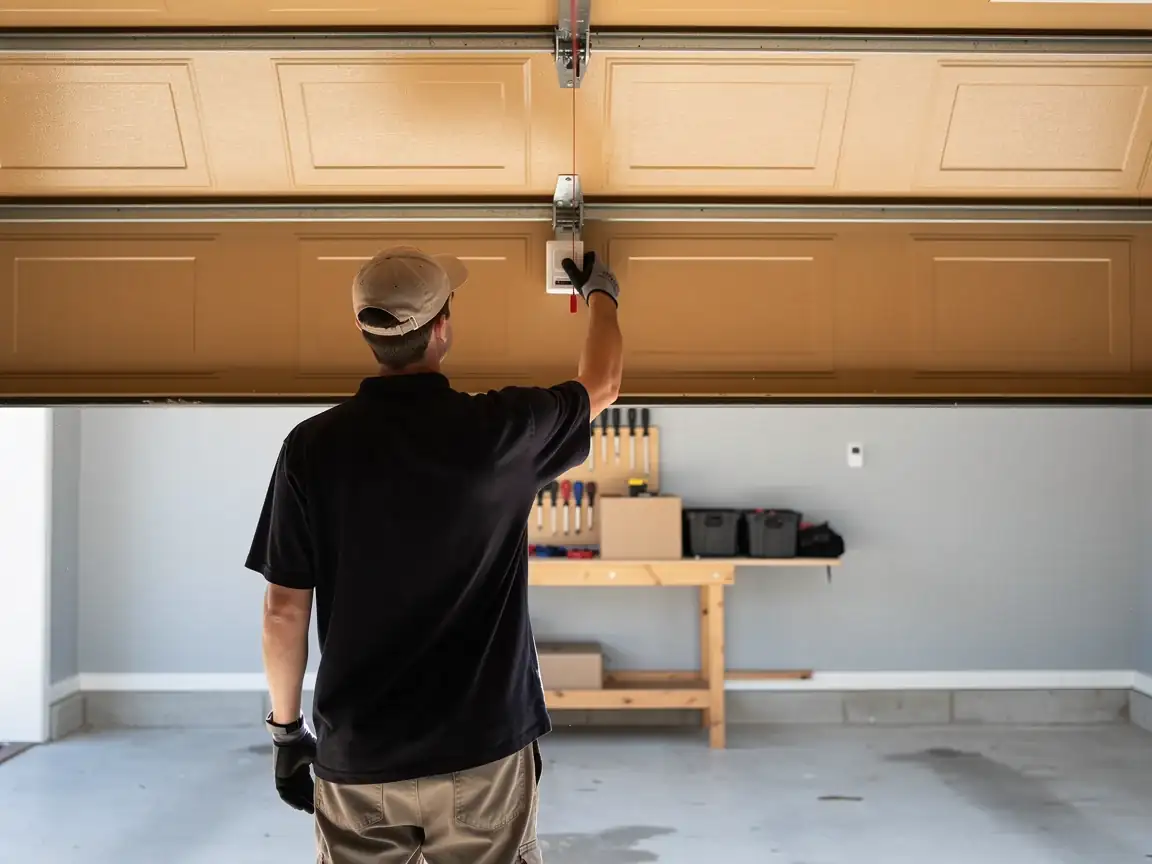
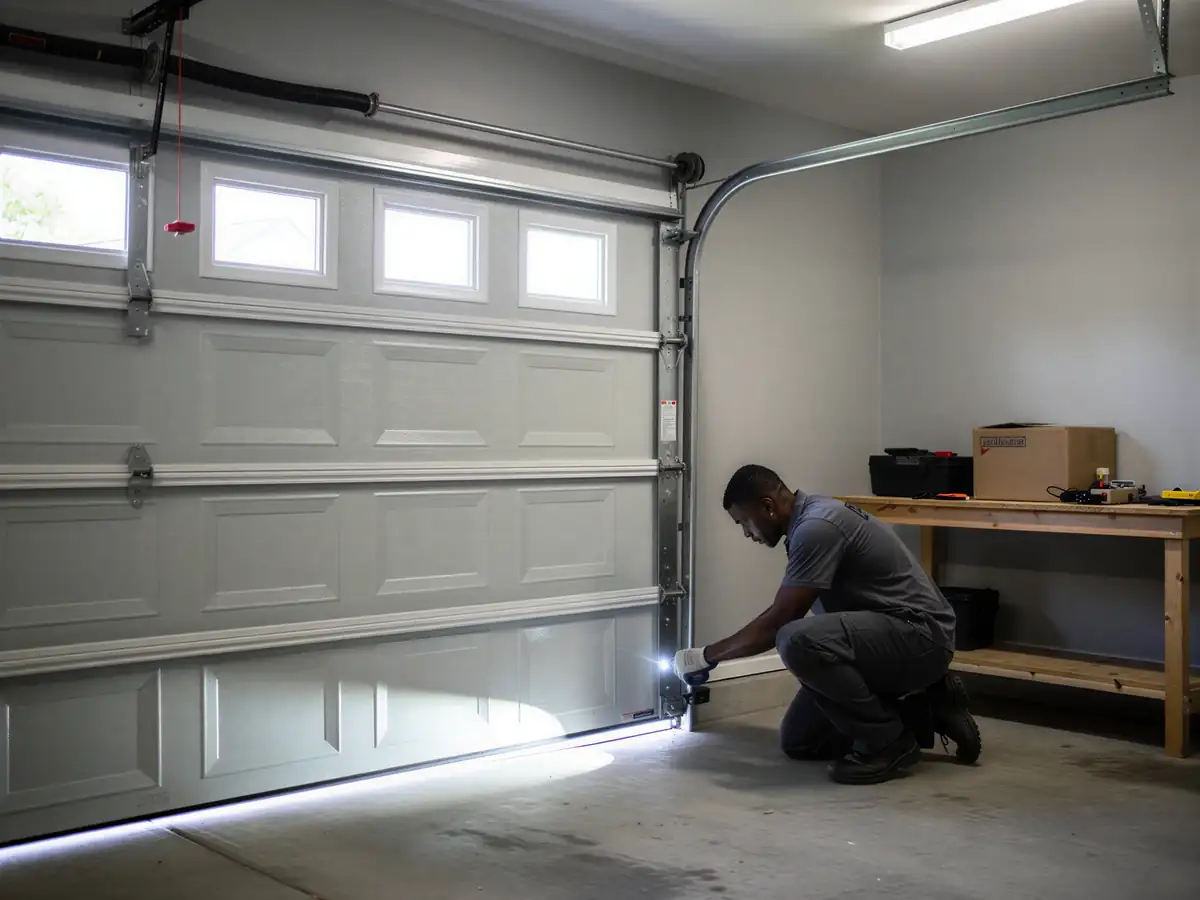
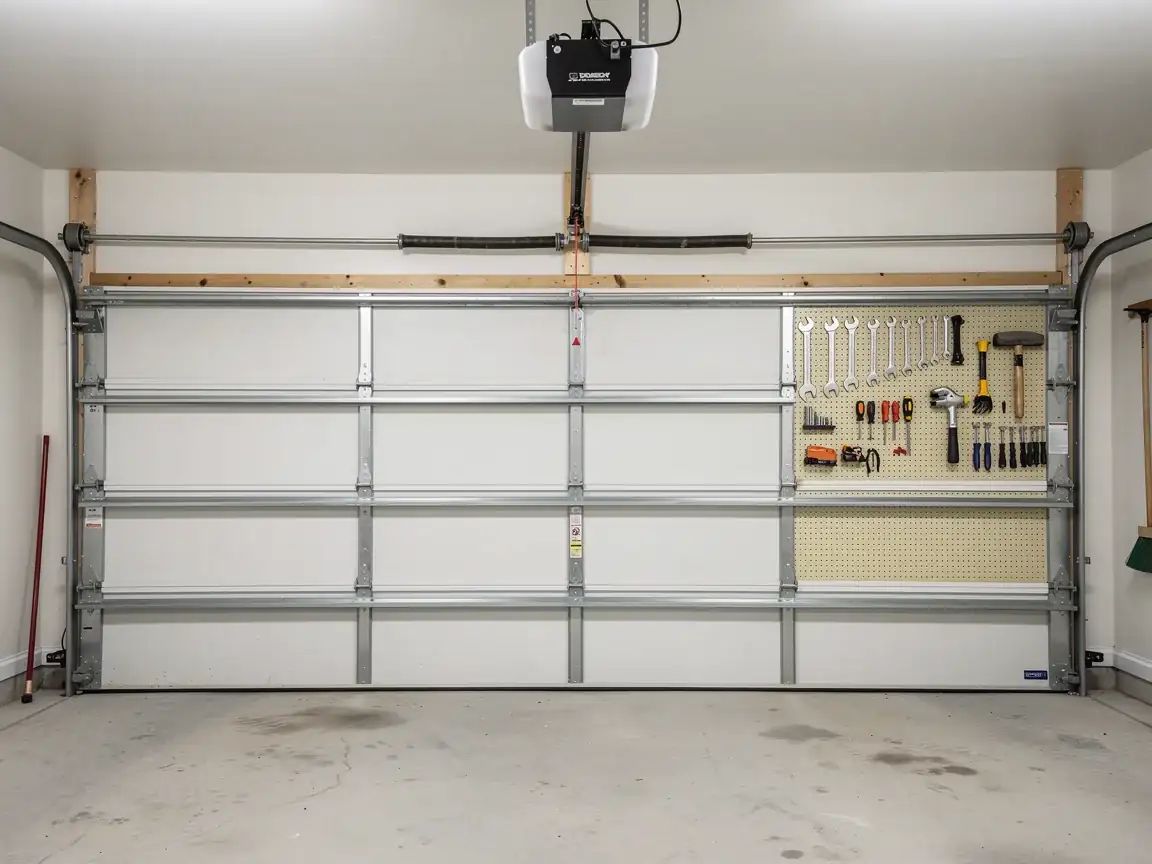
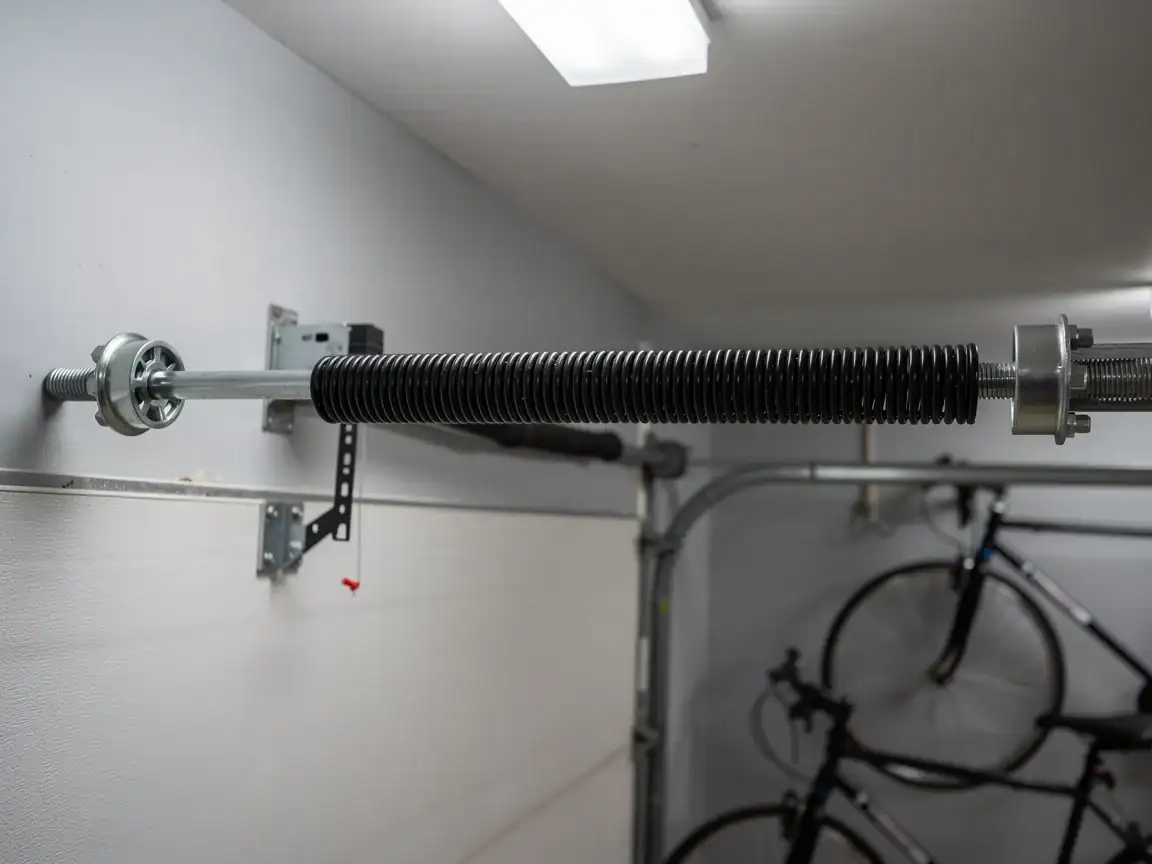
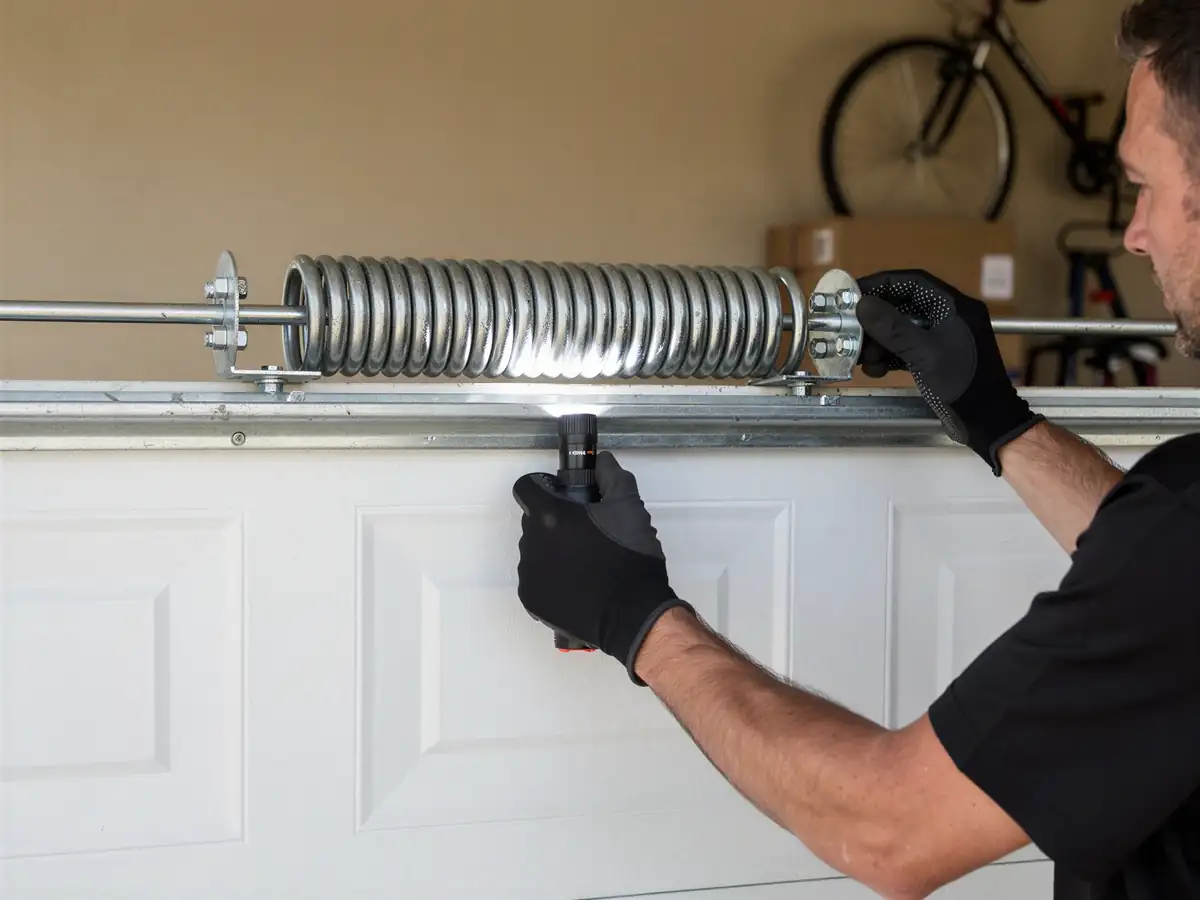
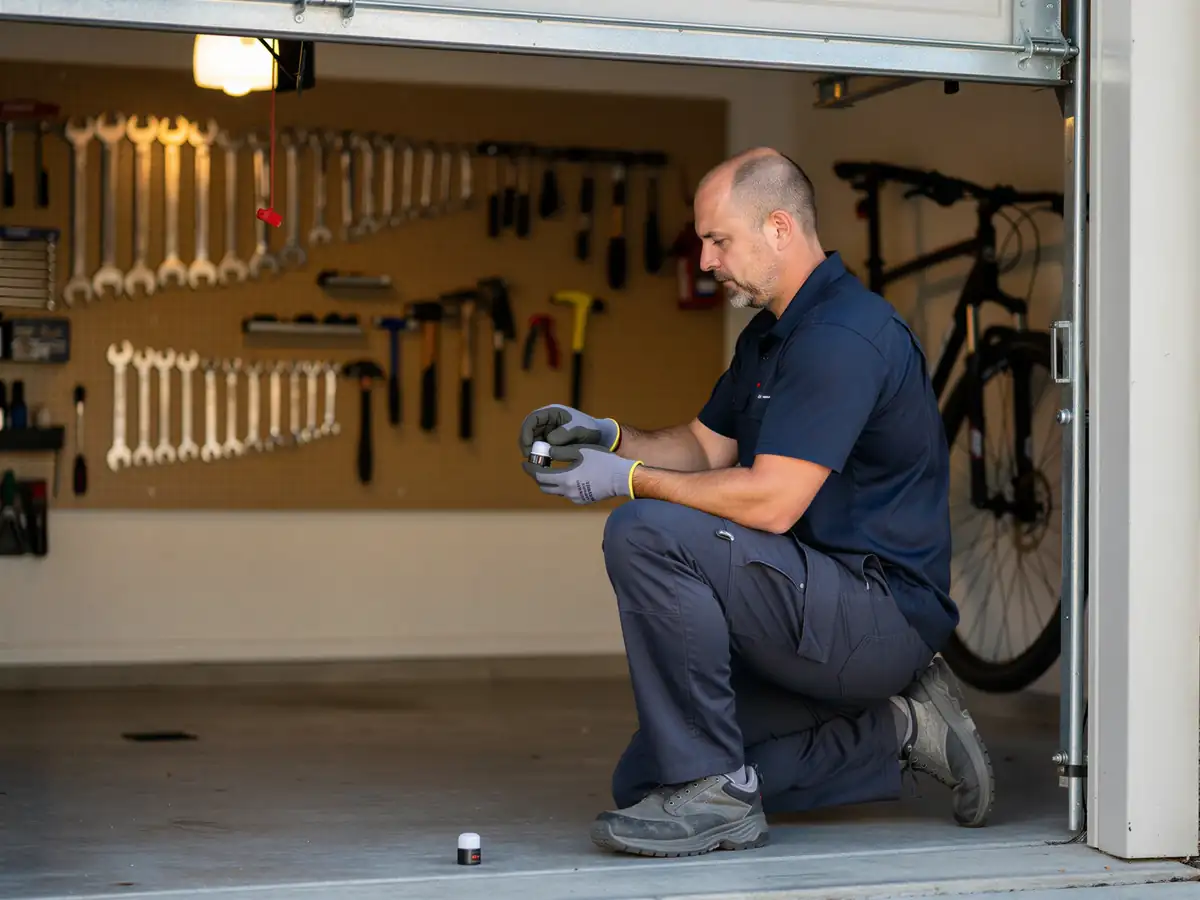
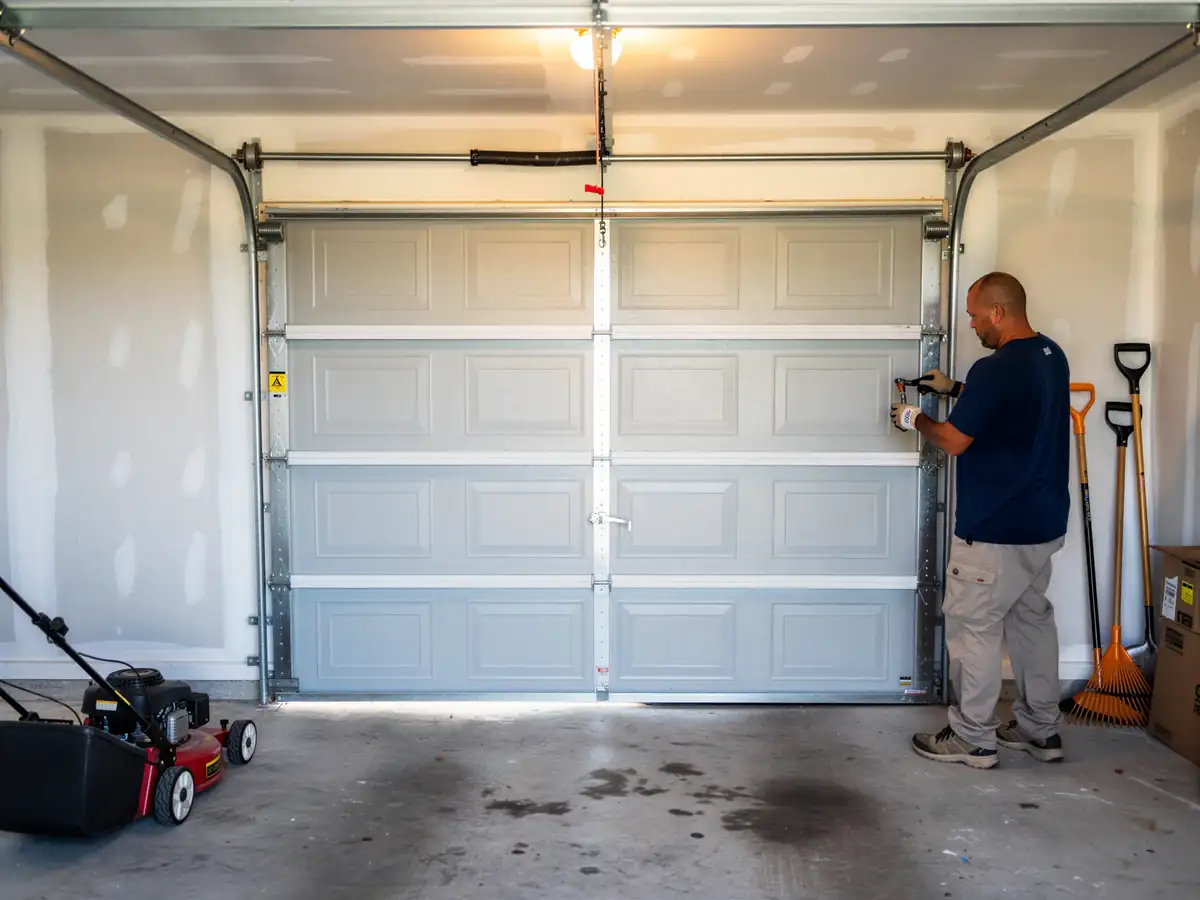
Some of this is fair to do yourself. Replacing the bottom weatherseal, lubricating rollers and hinges, and tightening loose bolts around the track are all reasonable weekend jobs with basic tools. Full installation is a different job. A torsion spring holds enough stored tension to cause serious injury if it's wound or released wrong, and getting panel height and track plumb slightly off means the door binds and the opener fights it from day one - which is often how a new install ends up looking like an old problem again within a year. We're straightforward about this: if your door is sagging because of a bent track or a single cracked panel, that's sometimes a repair, not a full replacement, and we'll tell you that on the call rather than sell you a door you don't need. But a ground-up install - new door, new springs sized to the door's actual weight, opener matched to it - is not a project to learn on your own garage.