How It Shows Up
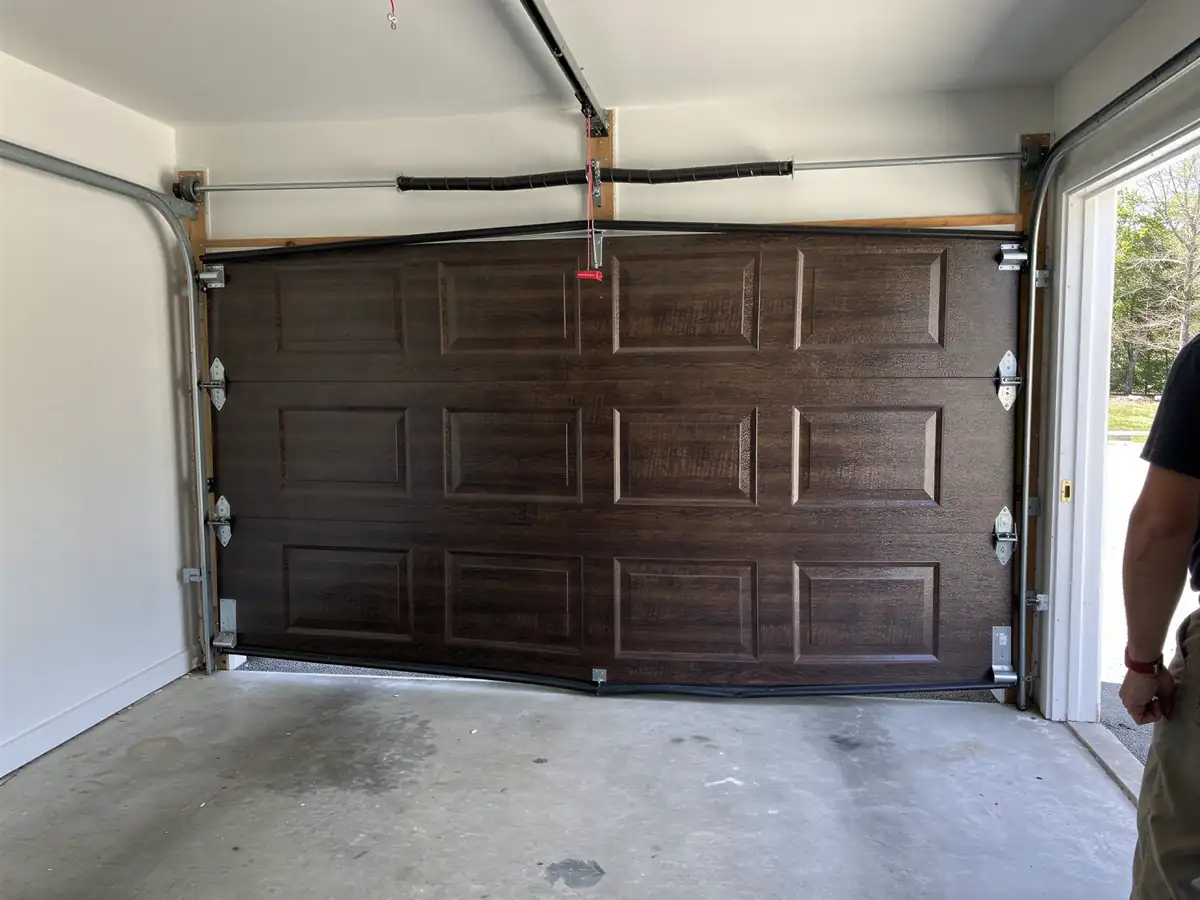
The door won't budge, or it only goes up a few inches before stopping cold
Sometimes you hear a bang from the garage like a gunshot - that's a torsion spring letting go under tension, usually when nobody's even touching the door. Other times it's slower: the opener strains, groans, and starts tripping its own safety reverse because the spring is no longer carrying its share of the door's weight.
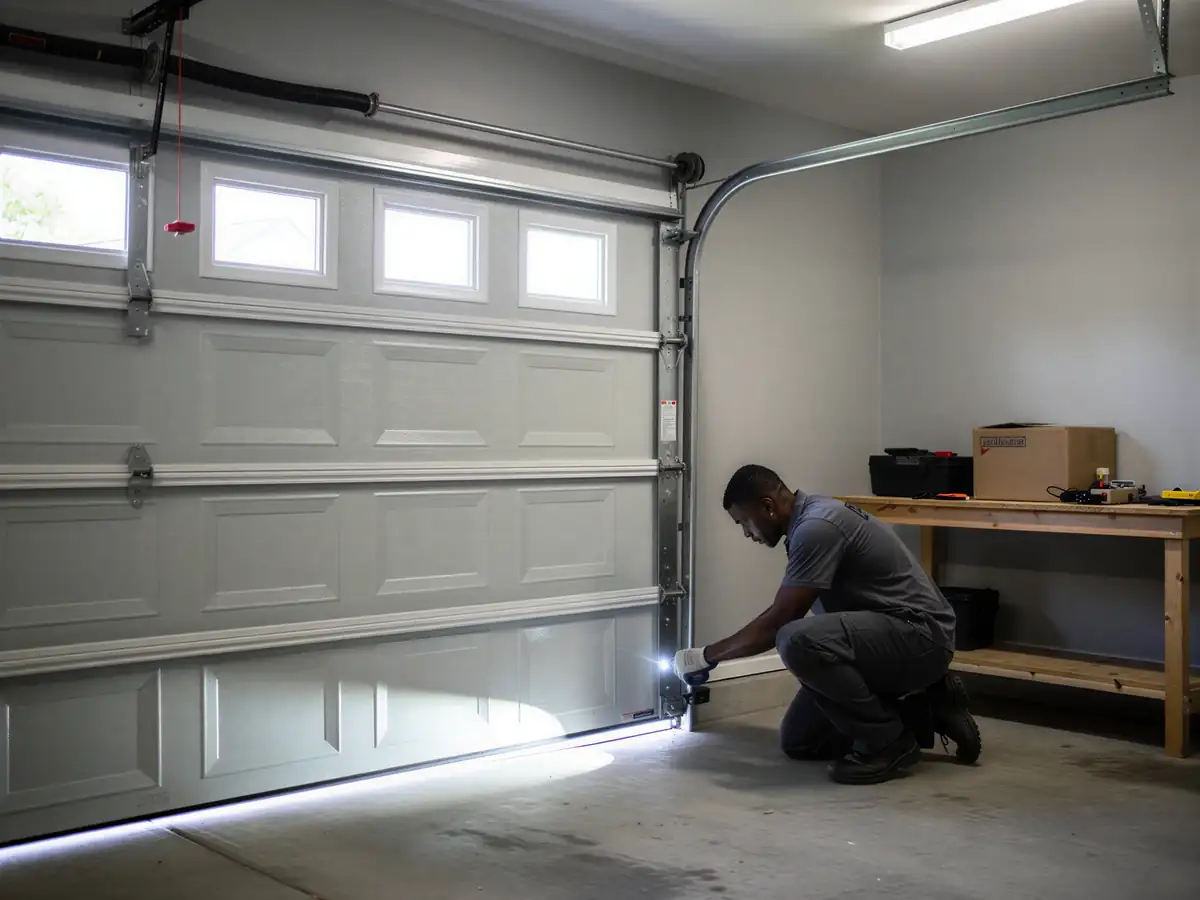
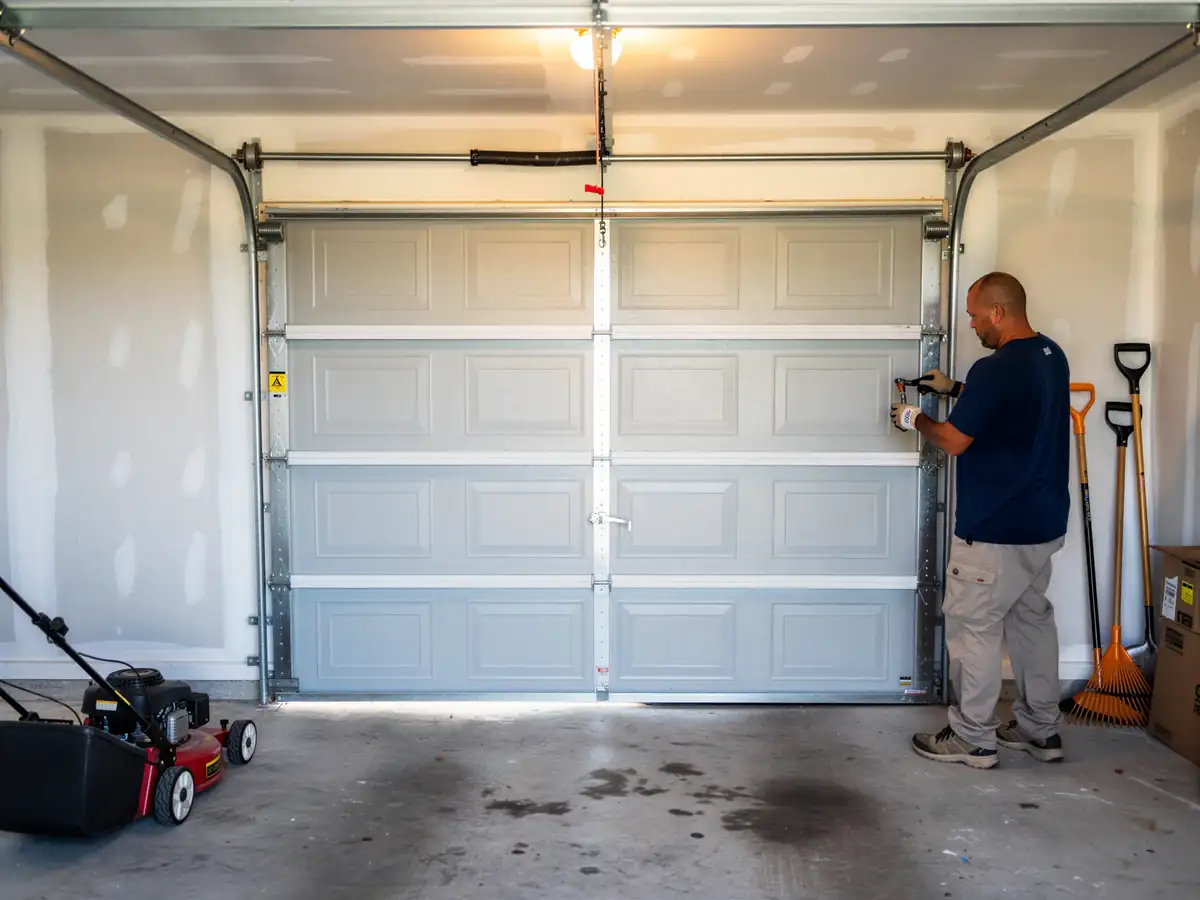
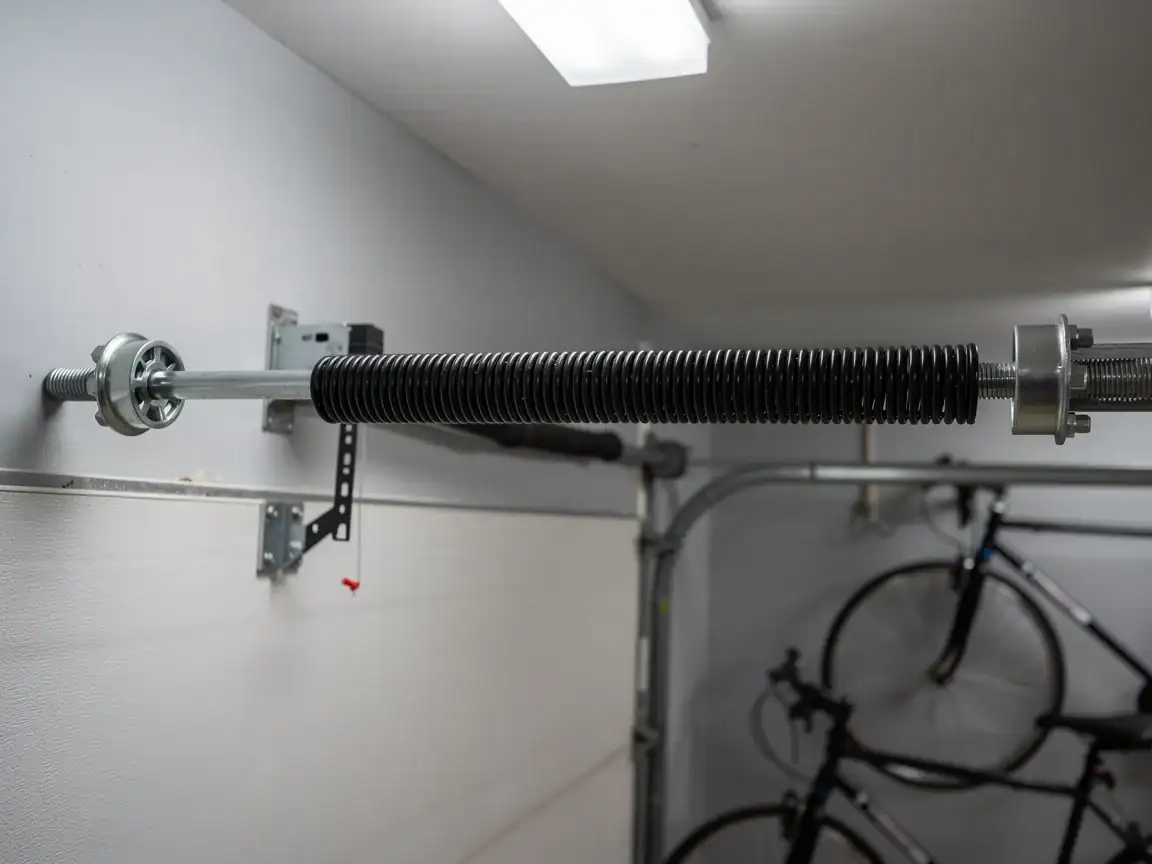
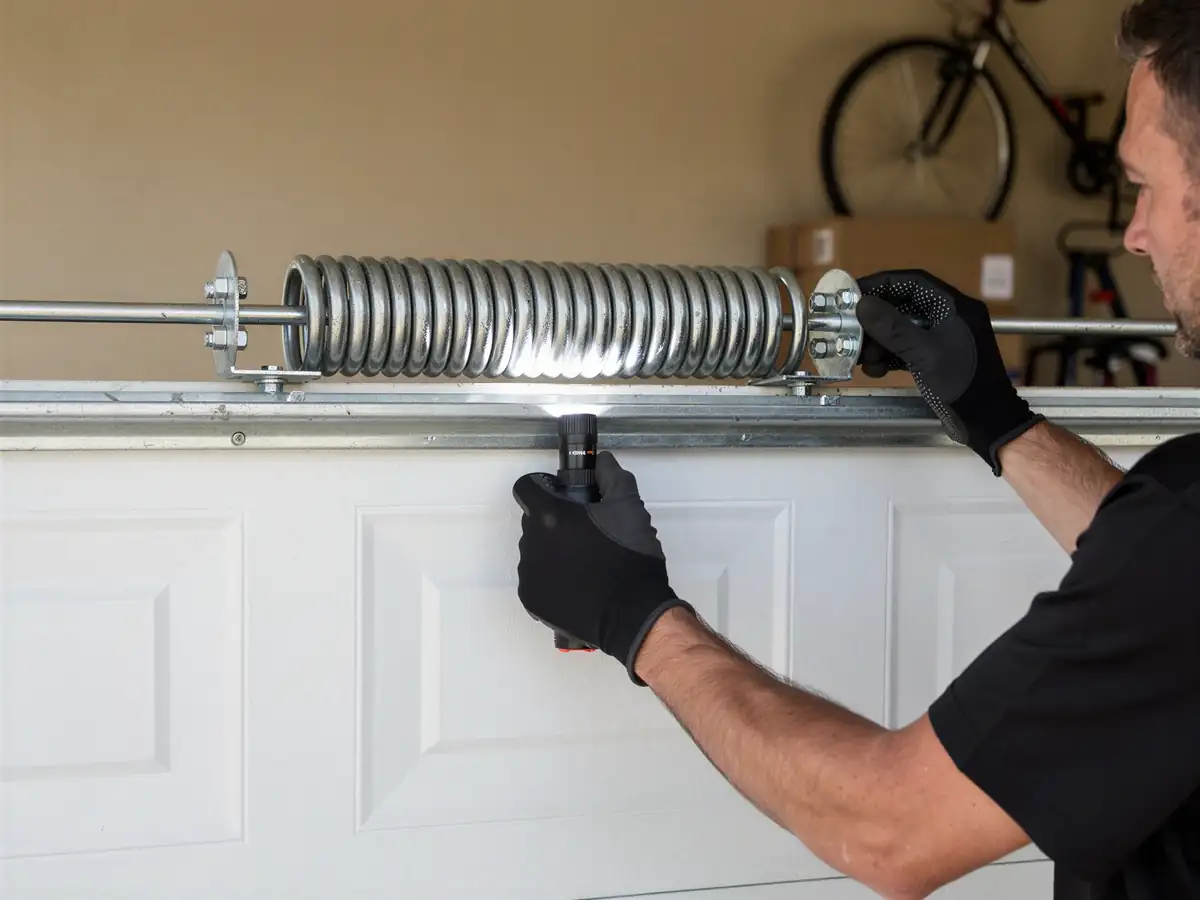
Look up above the door
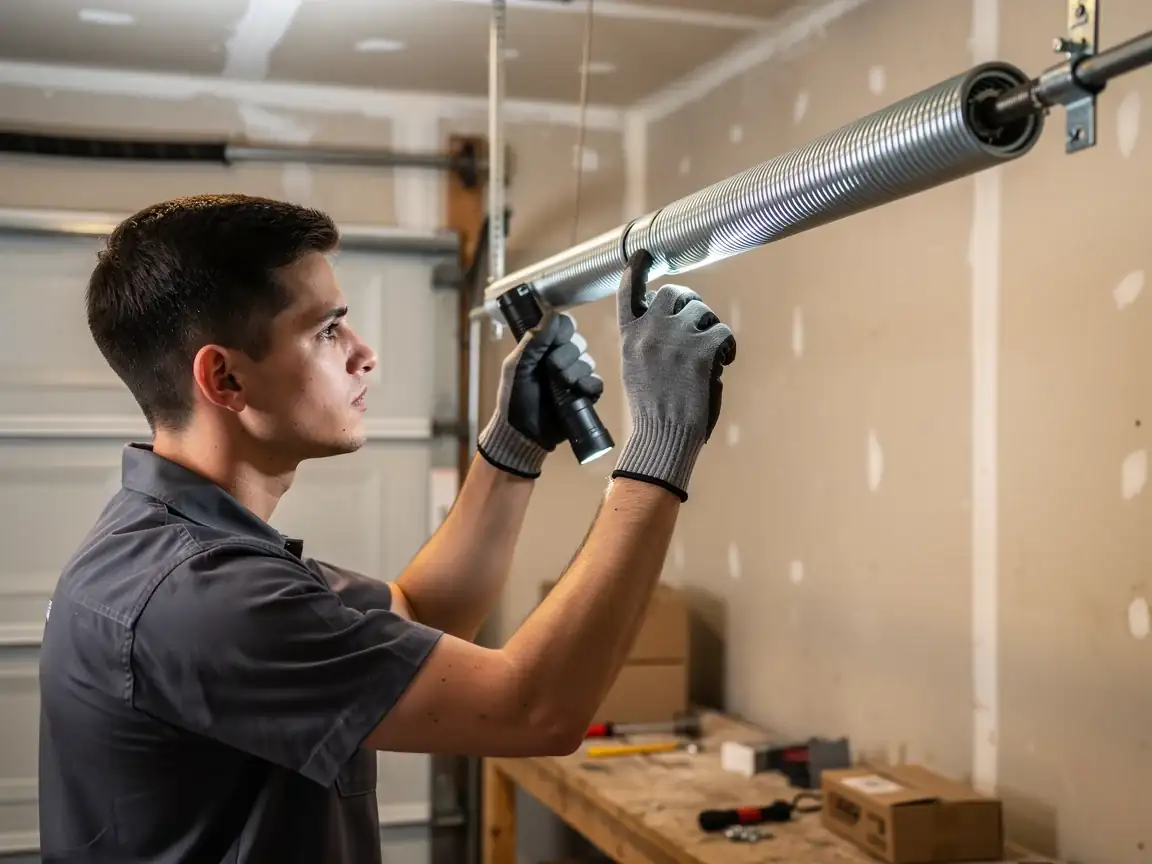
If you see one long spring on a bar (older setup) or two shorter springs side by side over the track, that's your torsion system. A gap in the coil, or one side sagging lower than the other, means it's done or close to it. On double doors especially, a single failed spring leaves the opener trying to lift 300+ pounds on its own - which is how you end up with a stripped gear or a bent shaft on top of the original problem.
Extension springs (the kind stretched along the horizontal tracks, common on older single doors) fail differently
They usually just snap and hang there. Either way, a broken spring is not a "use the door carefully" situation. It's a stop-using-the-door situation.
Why This Fails Locally
Most of the houses across our service area went up between 1967 and 2005, with the median right around 1991 and the thickest stretch of building happening in the 1980s and 90s, spread across the eleven communities we cover. That matters because a spring is rated for a cycle count, not a calendar date - and a door installed when a house was built in, say, 1988 has had three and a half decades to rack up open-close cycles, whether anyone's touched the spring since or not.
The climate here is mild with the occasional freeze, which is kinder to steel than a hard winter further north, but it isn't nothing. A spring that sits coiled under tension through hot Texas summers and then a cold front swing loses temper in the metal over time, and that fatigue doesn't announce itself until the coil gives out.
Across the 28,371 households in our service area, 13,737 are owner-occupied houses - the kind with an attached garage and a door that's been cycling on the same spring set since a decade most of them don't remember clearly. That's a lot of original hardware still doing a job it was never built to do forever.
Doing It Yourself
I'll say this plainly: don't. A wound torsion spring holds enough stored energy to break fingers, fracture a wrist, or worse if the winding bars slip. This isn't like replacing a light fixture. The tools matter - proper winding bars, not screwdrivers - and so does knowing which direction to wind and how many quarter-turns the specific spring needs.
What you can safely do yourself: check the spring visually for a gap or separation, listen for the door starting to sound labored before it fails outright, and keep hands and pets clear the moment you notice a sag or a loud noise from the garage. If the door is a double and one spring has gone, don't try to "limp it along" on the opener - that's how you turn a spring job into a spring-plus-opener job.
Extension spring replacement on an older single door is marginally less dangerous than torsion work, but the cables and pulleys involved still carry real tension. If you've got the right tools and have done it before, fine. If this is your first time standing under a loaded spring, it's not the place to learn.
Getting It Booked In
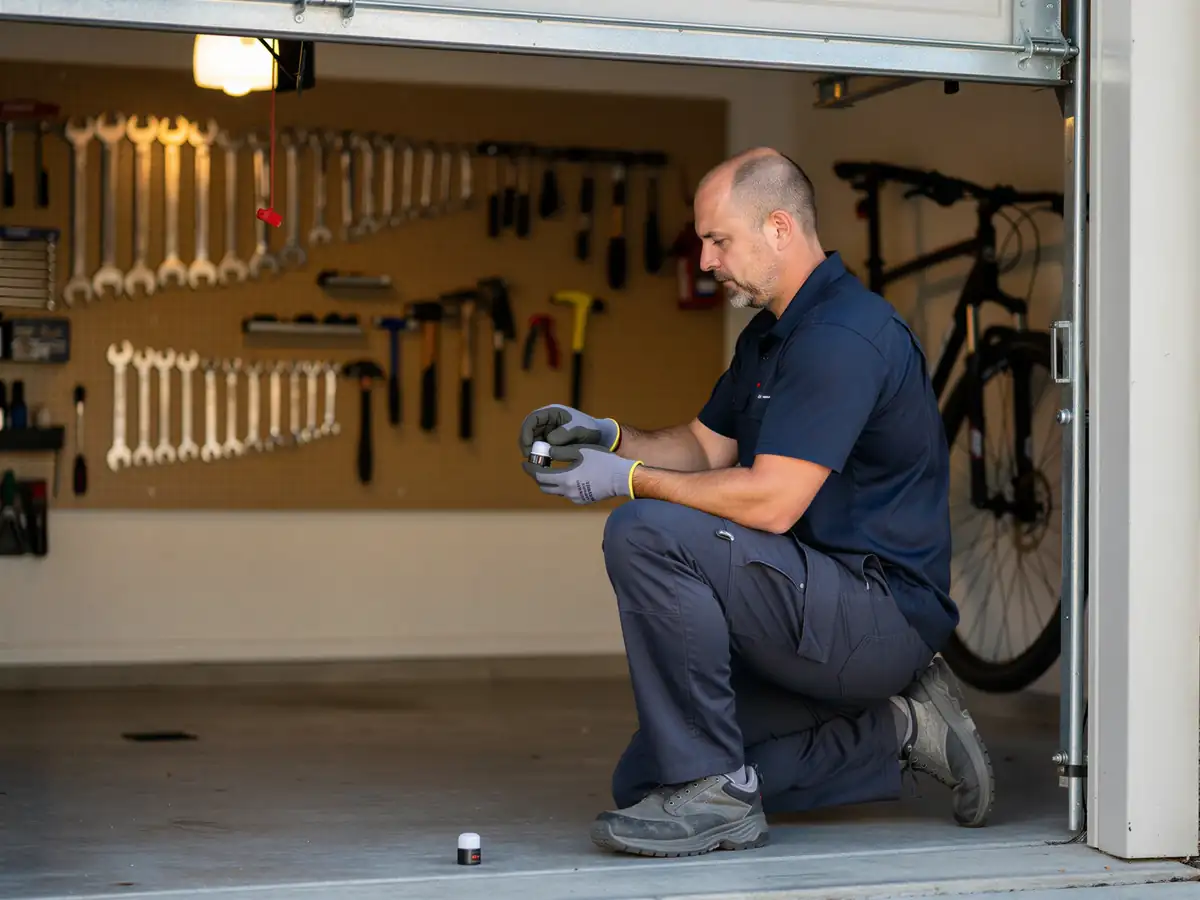
Spring replacement is a same-visit job in most cases
We bring stock sizes that cover the common torsion and extension setups found on houses built across this stretch of central Texas, and we size against your actual door and opener rather than guessing off a chart. If your spring is an odd length or an older discontinued size, that's the one case where we may need to order it in, and we'll tell you that up front rather than after the truck's already there.
We always replace both torsion springs on a double door at the same time, even if only one has broken
Mismatched spring age on the same door shortens the life of the one you didn't replace and throws off the balance, which then wears your opener gear. It costs a bit more up front and saves you a second call in a year or two.
If you're in Temple or anywhere in the surrounding service area, start here and tell us what the door is doing
Bang, sag, stuck, or just slow - and we'll get the right spring on the truck before we show up.