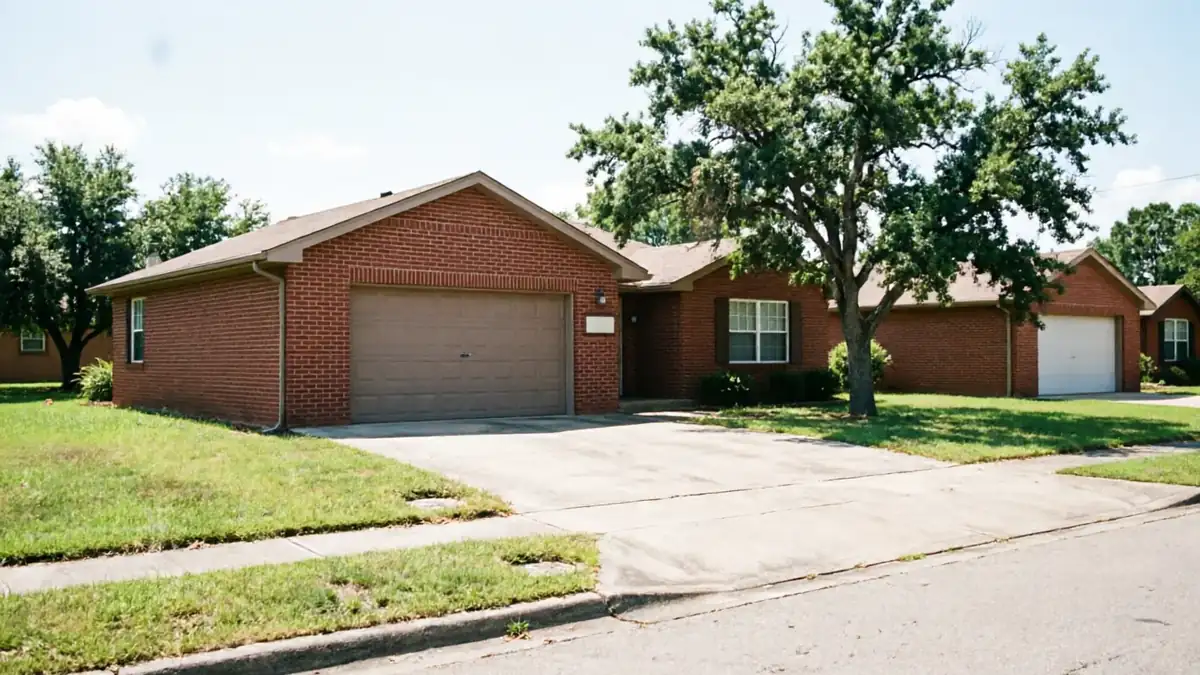
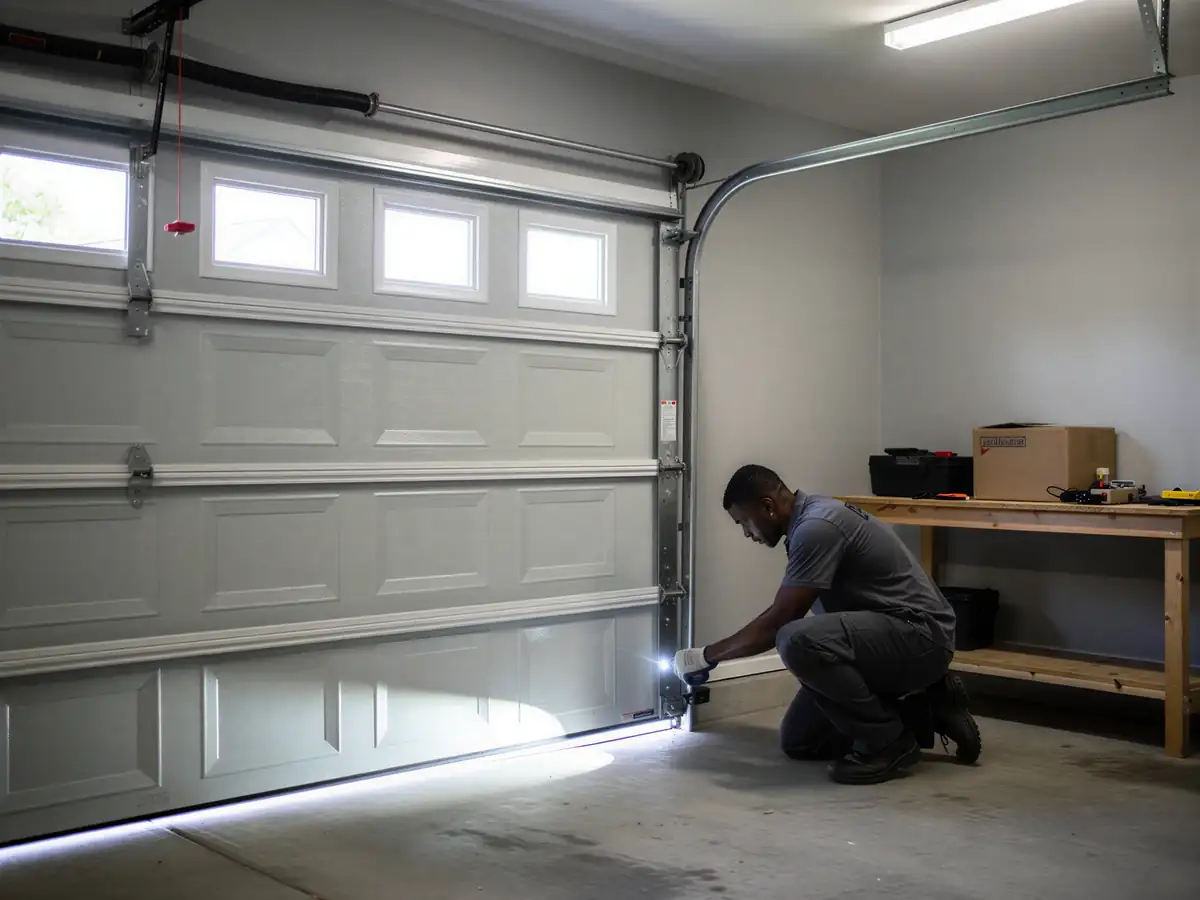
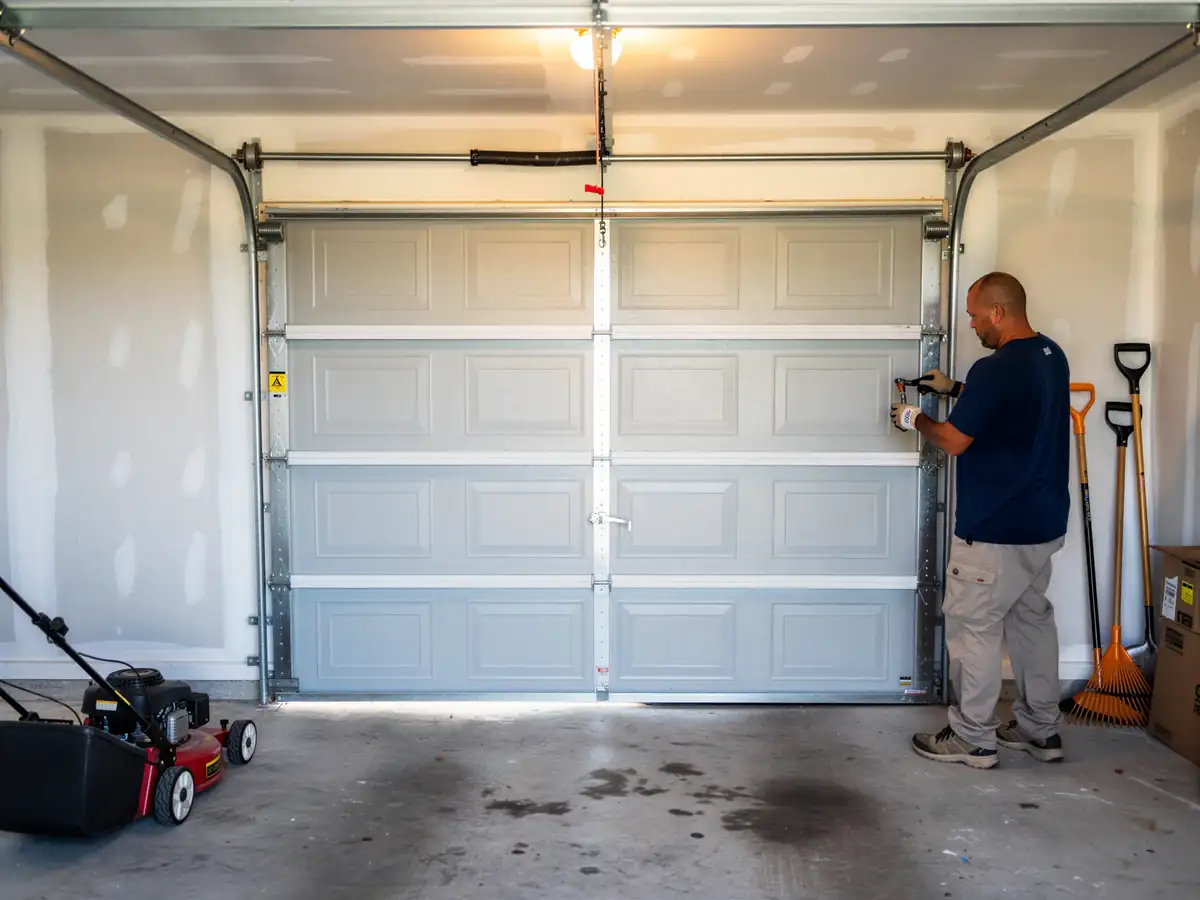
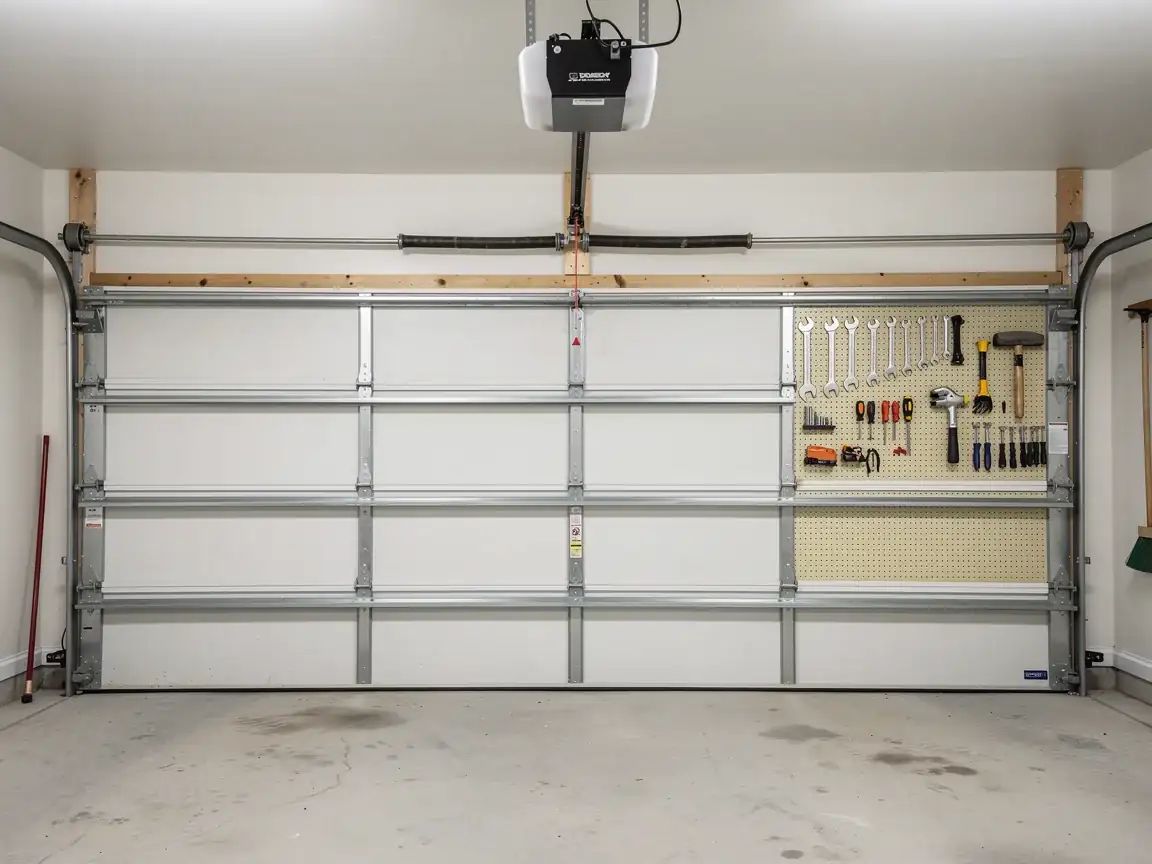
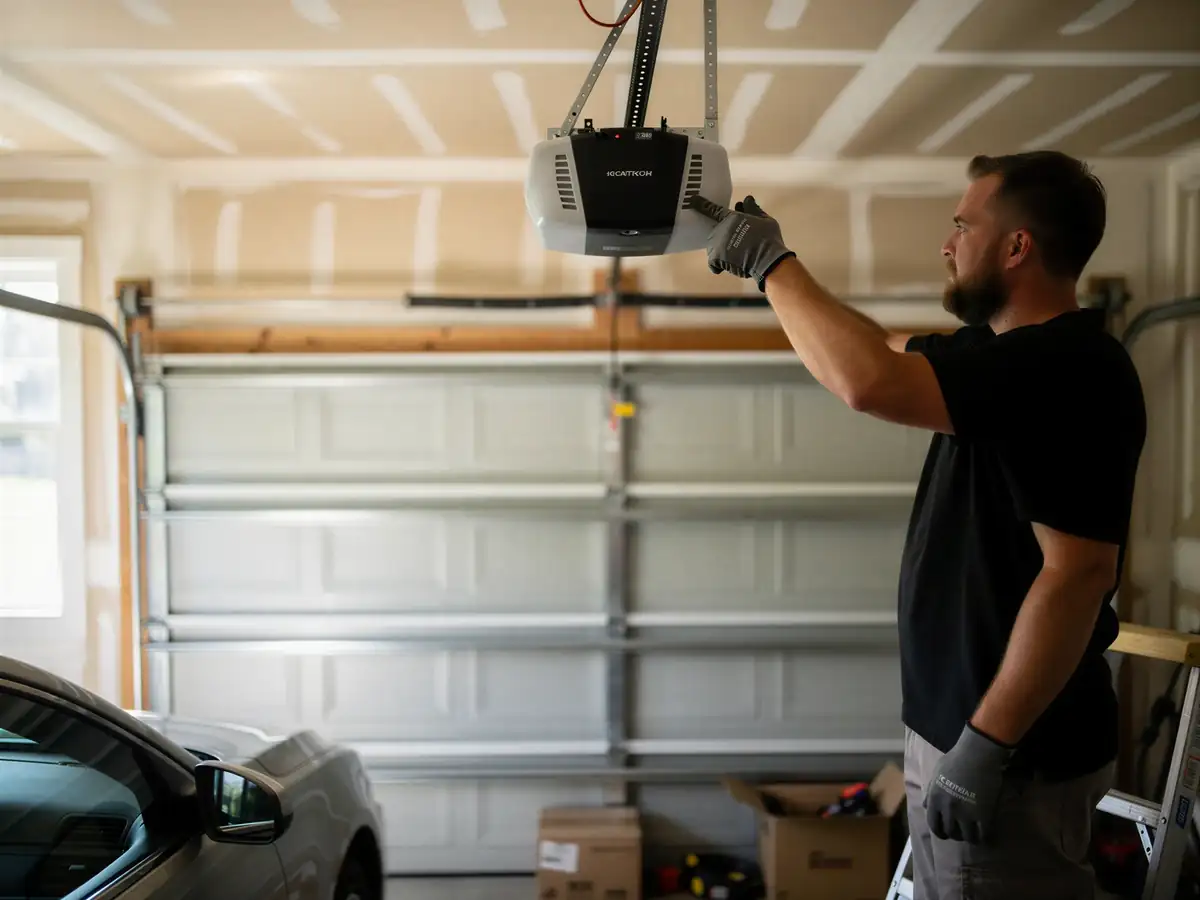
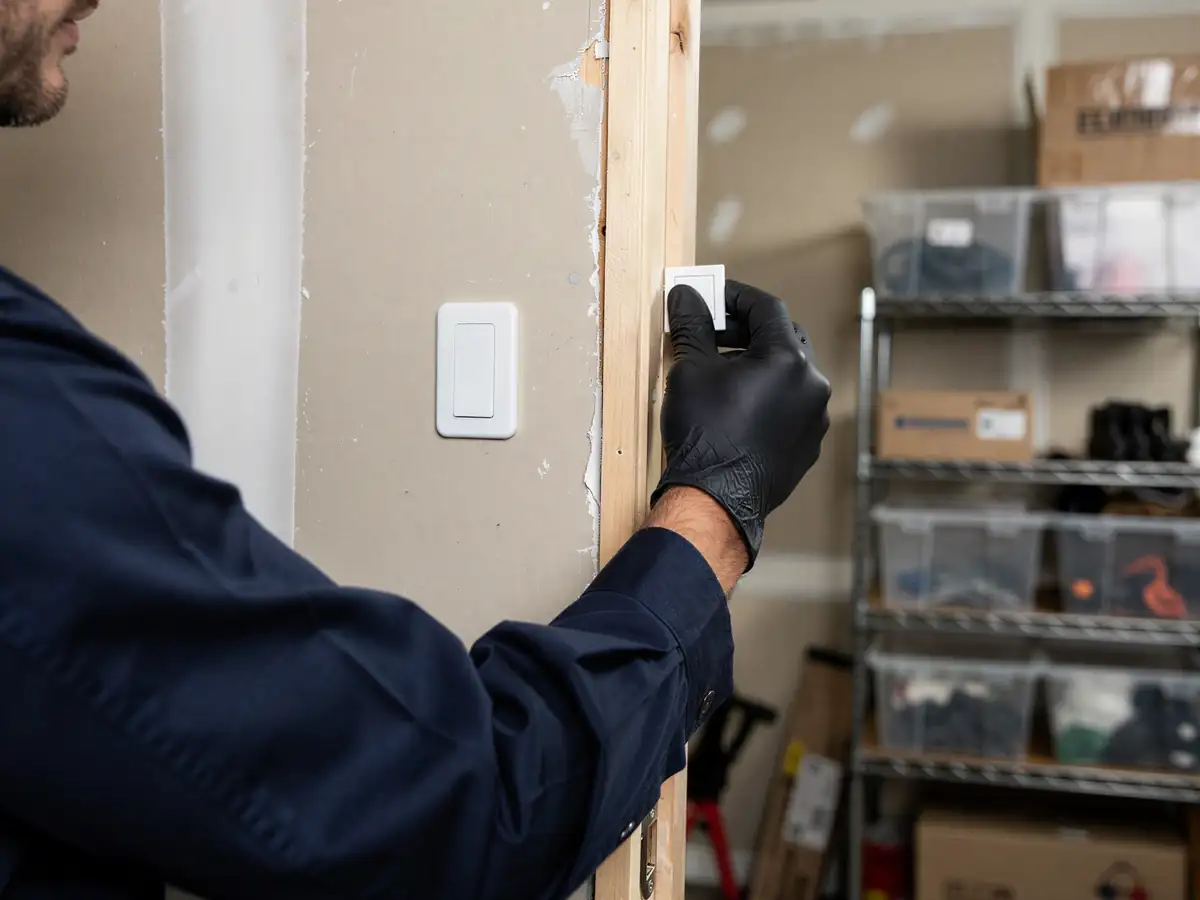
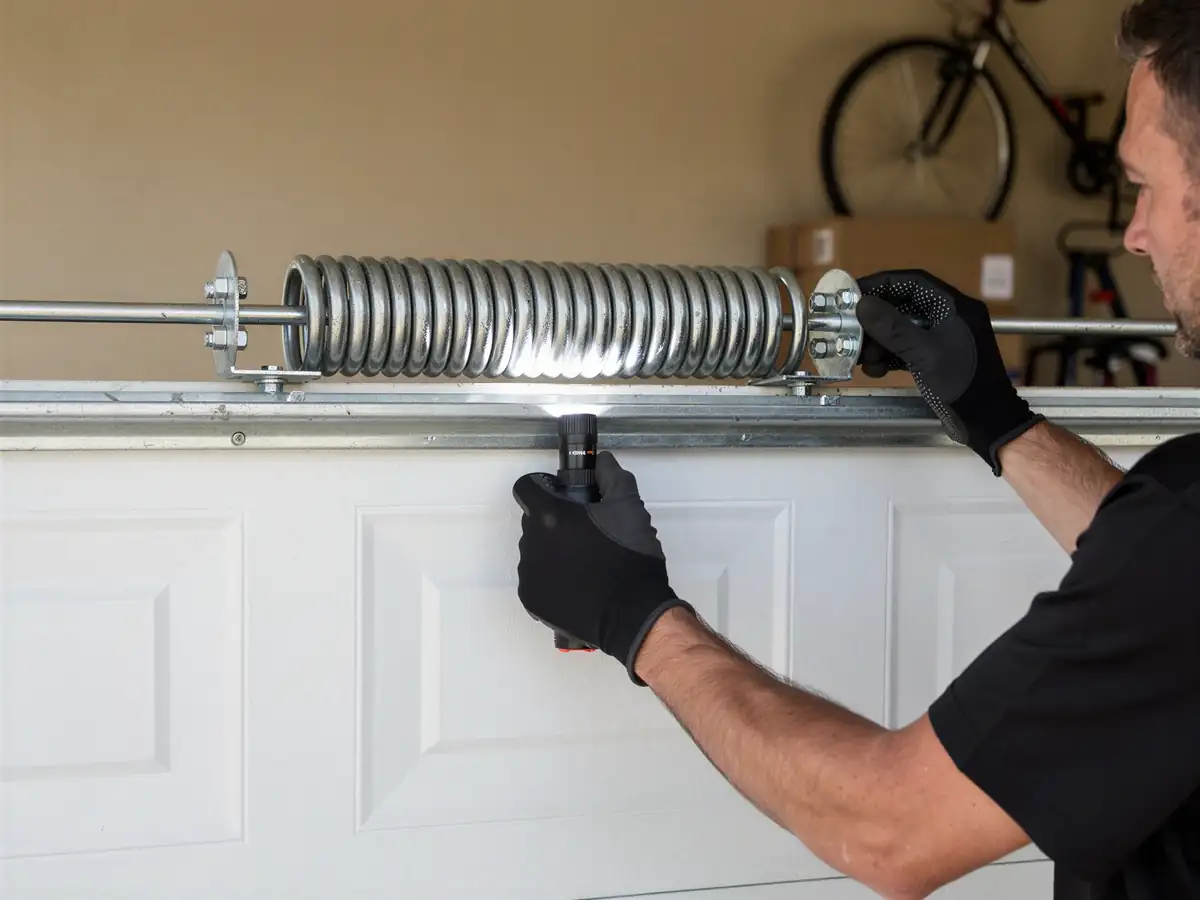
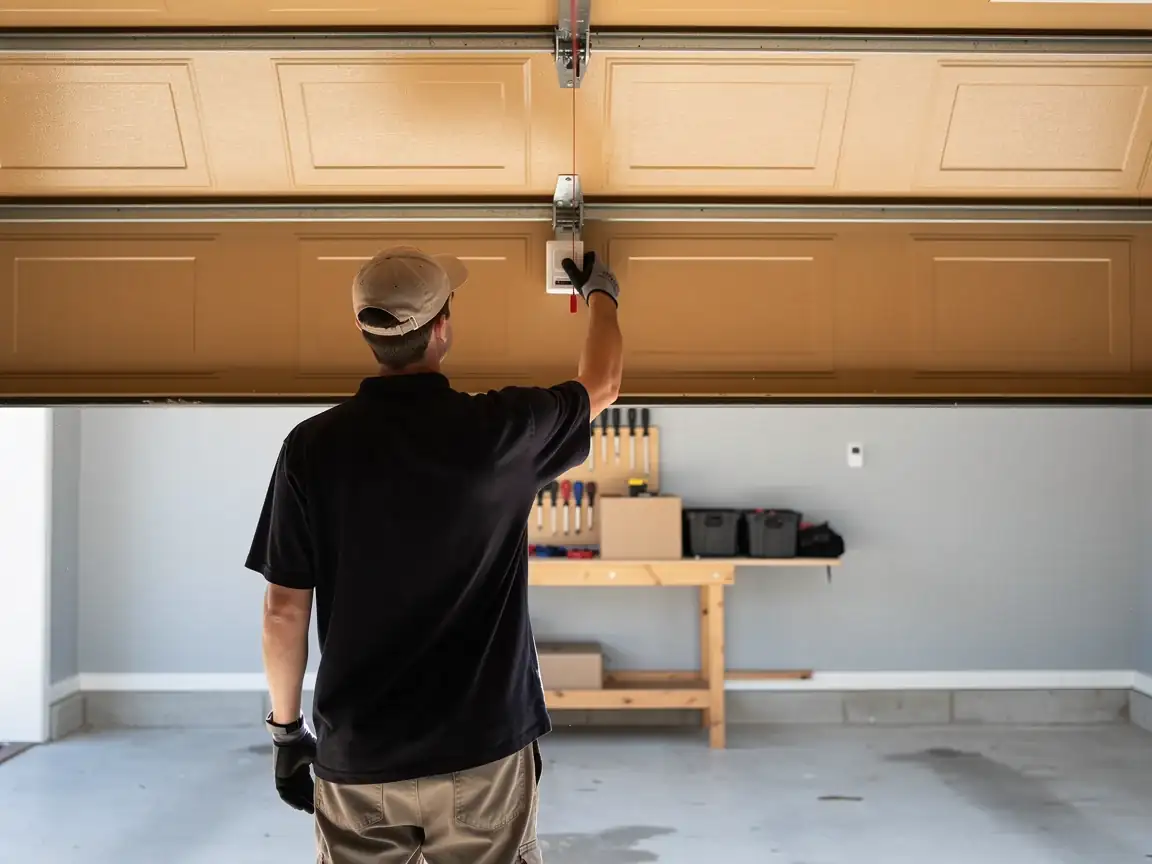
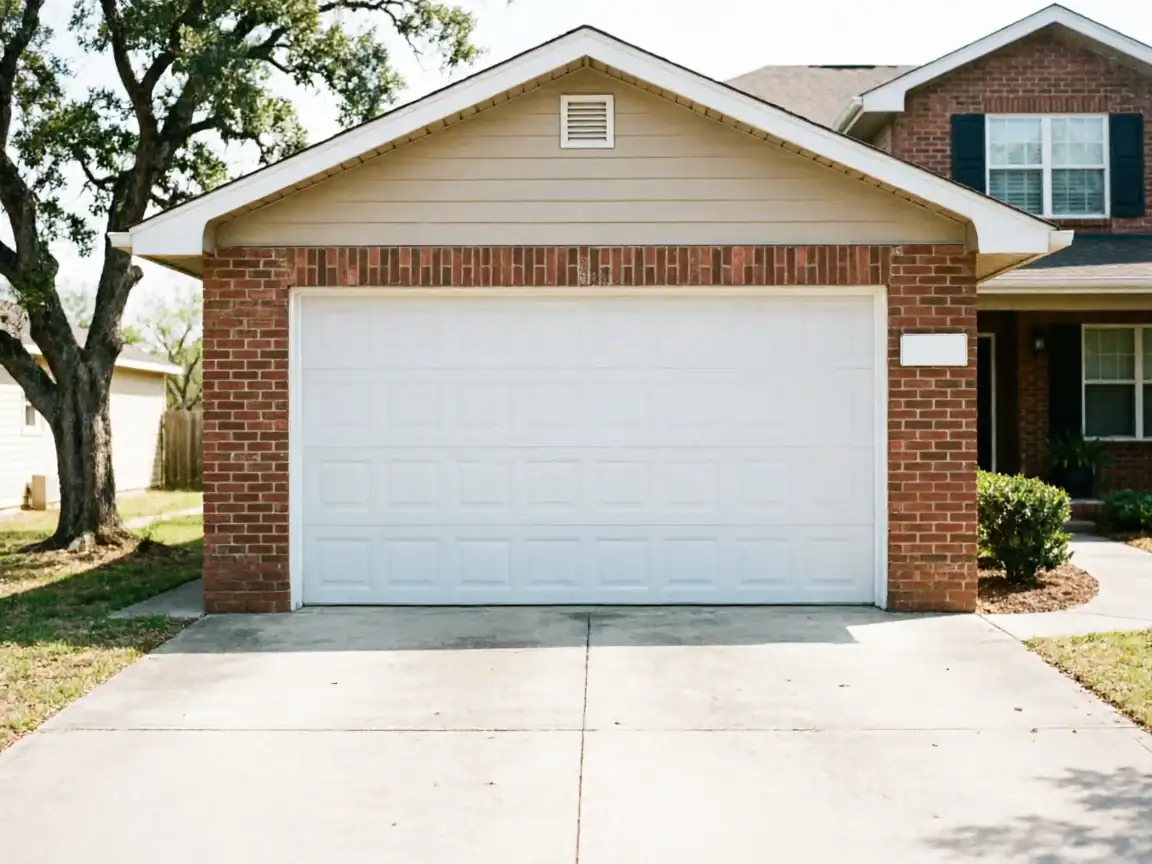
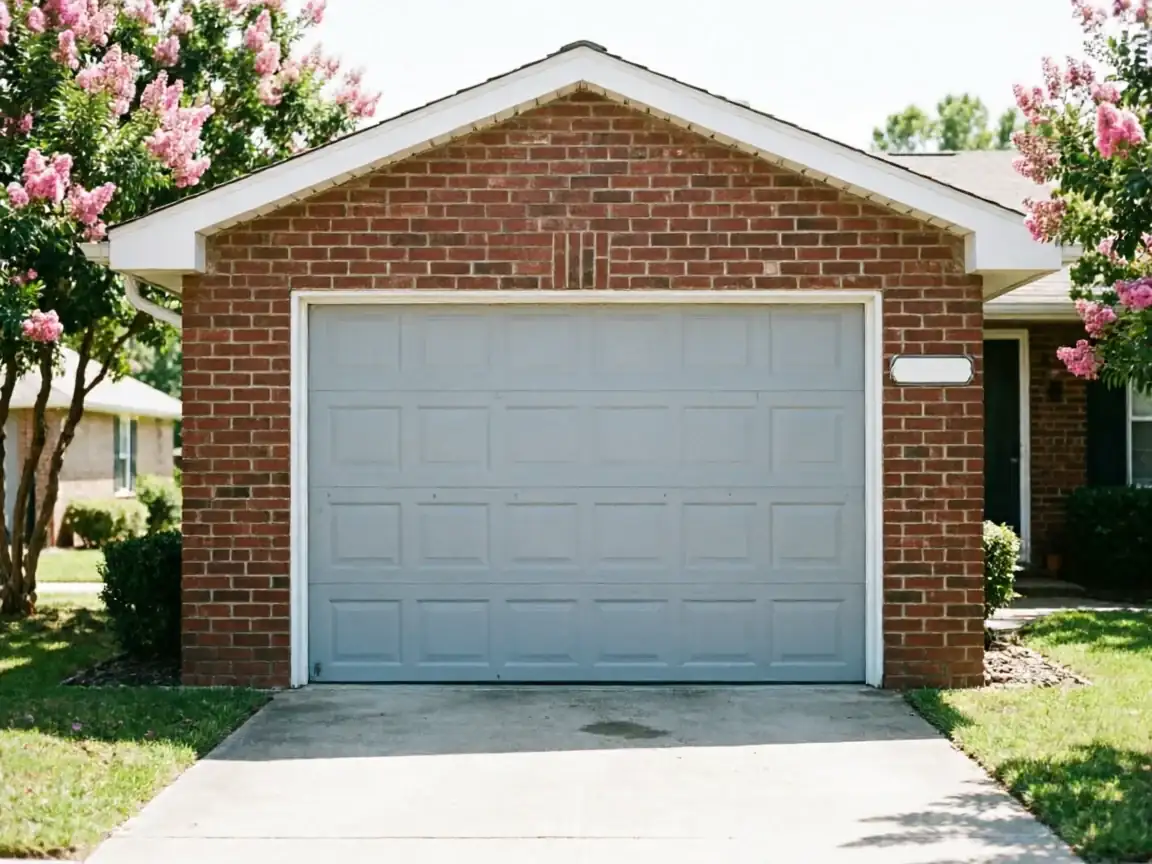
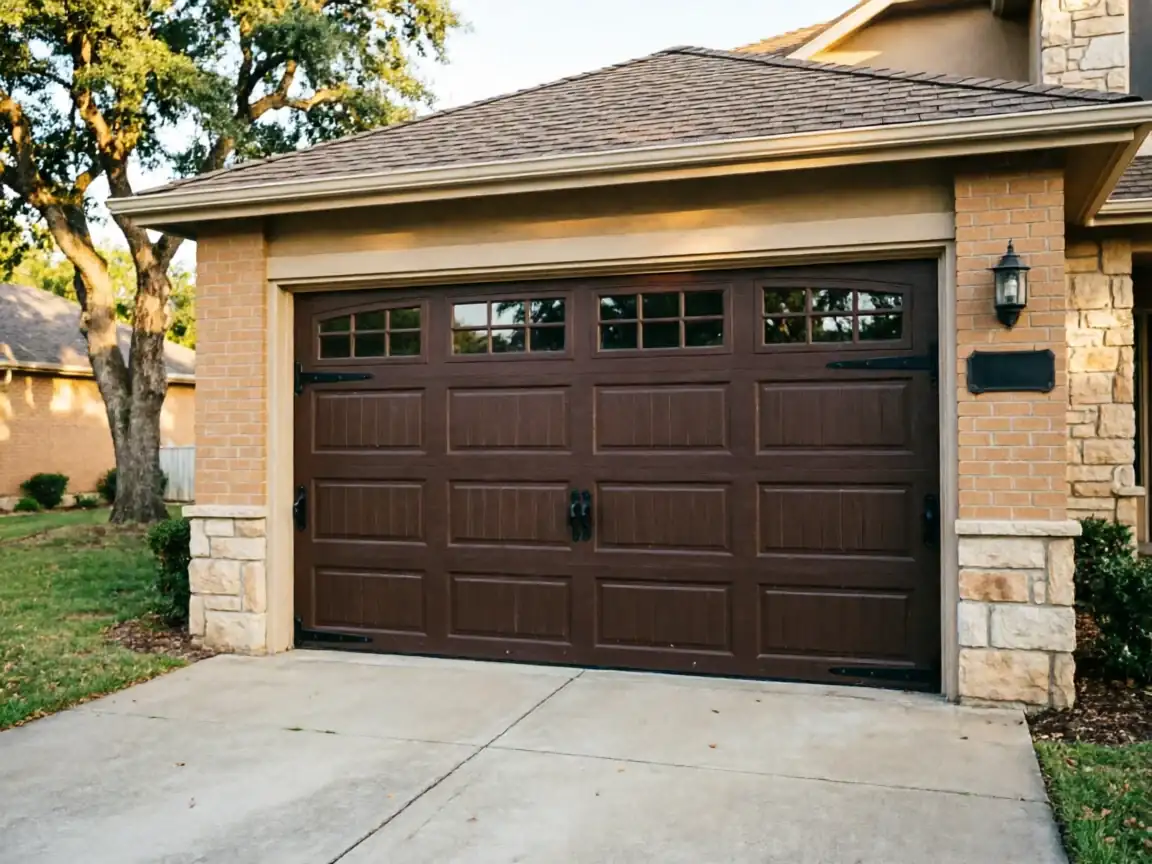
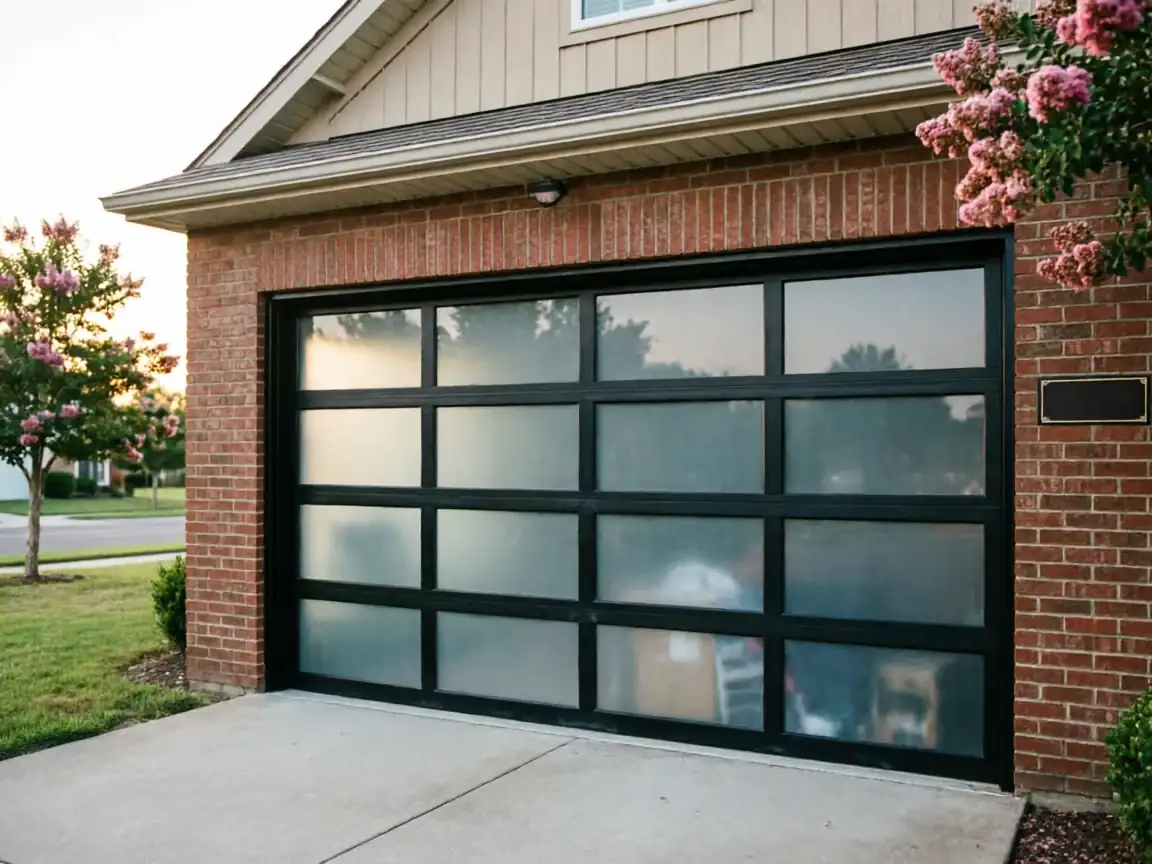
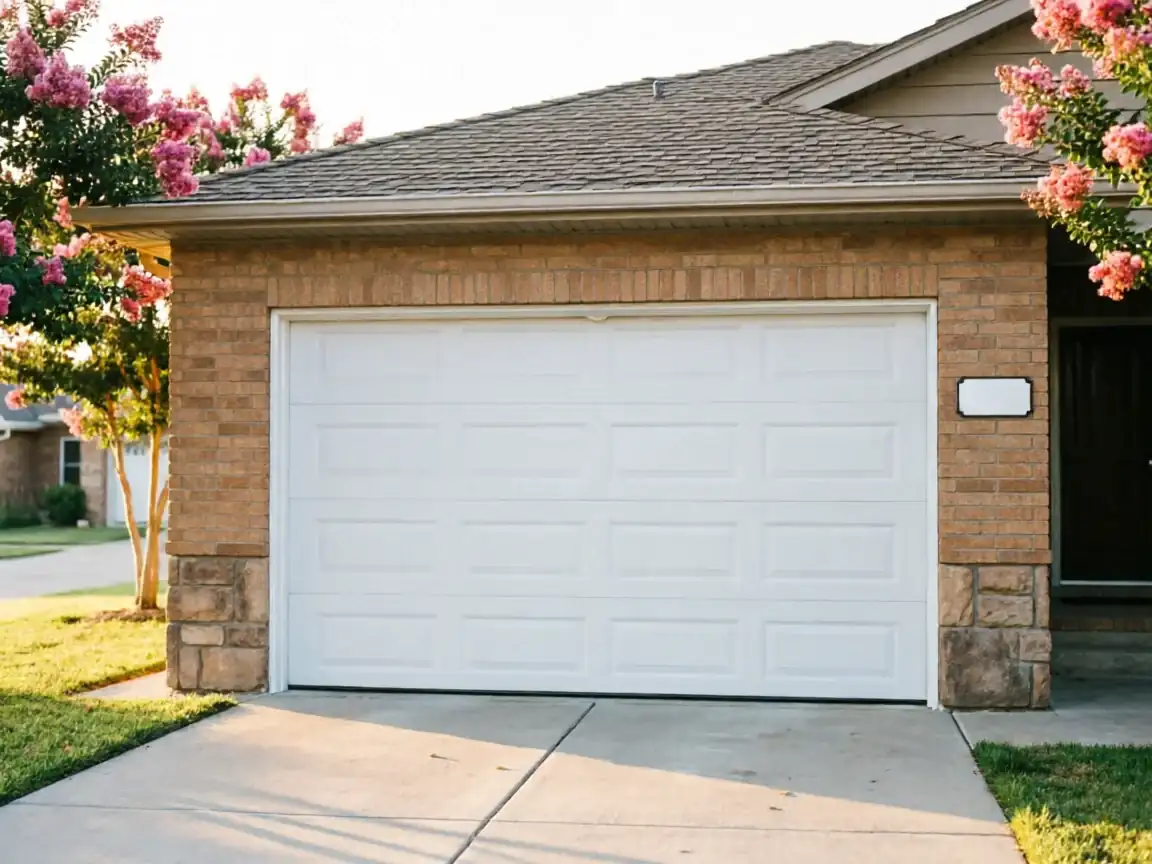
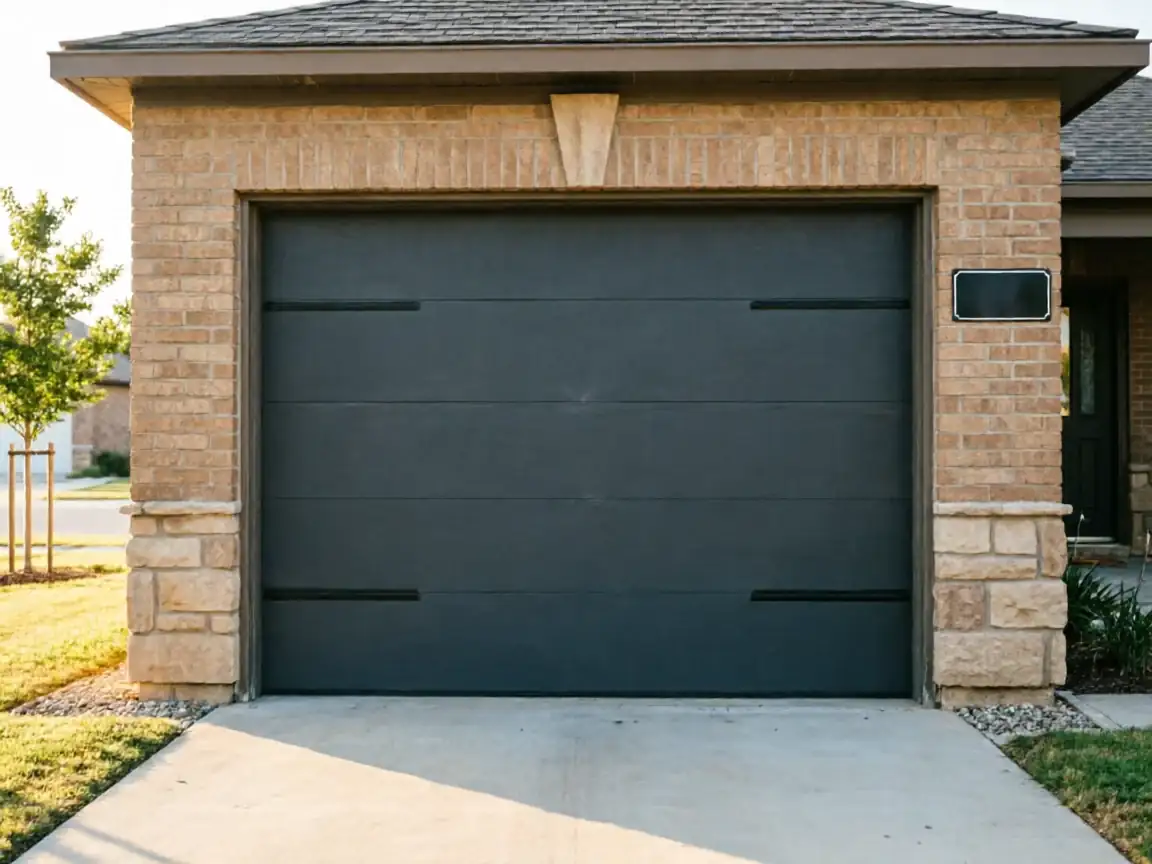
Salado's housing stock centers on 1991, which puts most doors here squarely in the same window as the wider Temple-area build boom that ran 1967 to 2005. That matters because the opener and spring hardware installed in a 1991 build is a specific generation: chain-drive openers without rolling-code security, and torsion springs sized to lighter steel doors than what's sold today. If your house went up around then and nothing's been swapped out, you're running 30-plus-year-old steel drums and a safety reversal sensor setup that predates the photo-eye requirement most homeowners assume is standard. We see this pattern across the 1980s-90s stock that dominates this part of the county, not just in Salado. The fix usually isn't a full teardown - it's recognizing which parts are original and which have already been replaced piecemeal over three decades, because mixed-generation hardware is where most of the odd noises and uneven travel come from. A door that's never been touched since 1991 is also a door whose cables and rollers are well past any sane service interval, even if the panels themselves still look fine.
Common Jobs Here
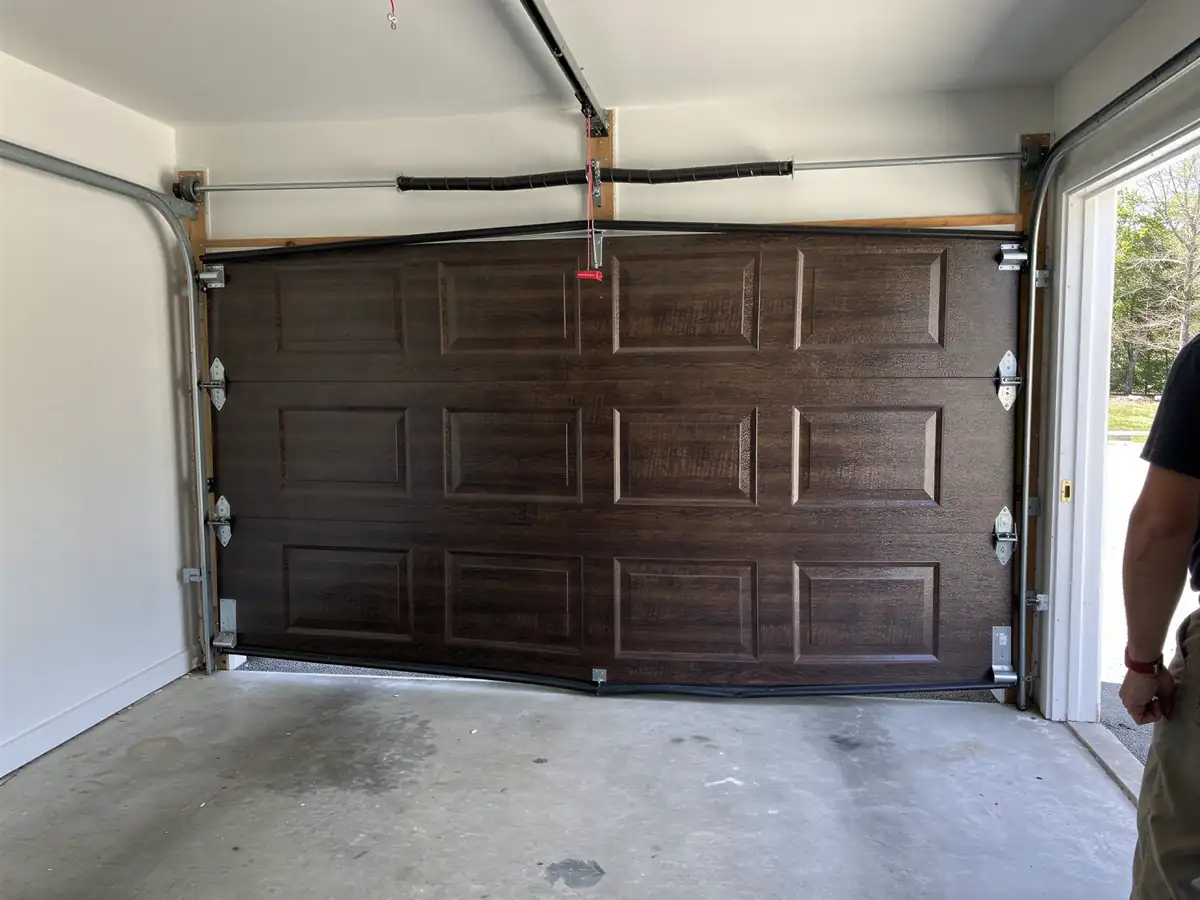
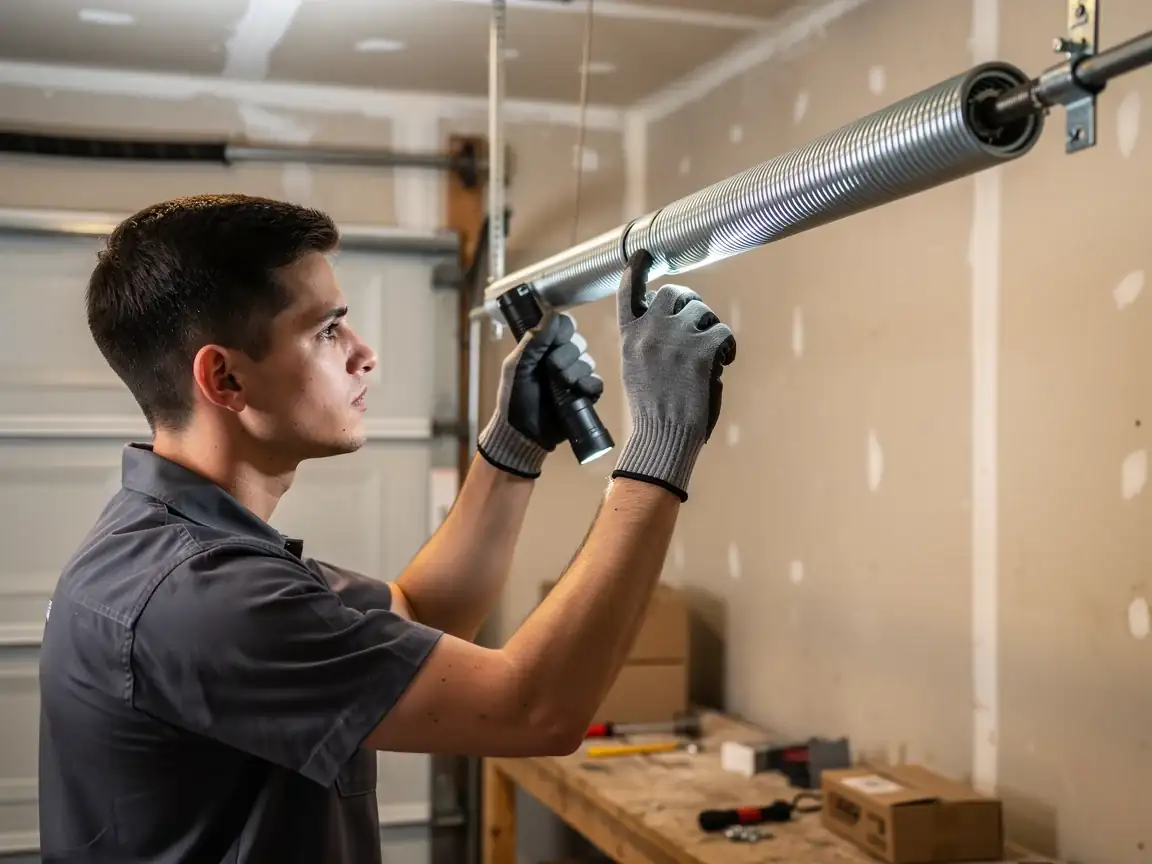
The calls that come out of Salado skew toward torsion springs reaching end of life on original hardware, and openers from the pre-rolling-code era that finally quit sending a clean signal. We also get a fair number of track realignment calls - over 30 years a door settles, slabs shift slightly, and a track that was plumb in 1991 isn't always plumb now. With a median household income here running well above the surrounding service area, we also see more owners choosing full opener upgrades rather than patching the old chain-drive unit, since the cost difference against a quality insulated door isn't a dealbreaker for most of these households. Mild winters with occasional freeze mean we're not chasing the kind of frozen-track calls you'd get further north, but a cold snap can still stiffen old lubricant enough to strain a tired spring past its limit, which is usually the call we get the morning after.
This Area's Housing
Salado has roughly 896 households, a small enough base that the housing here doesn't show the wide age spread you'd find in a bigger subdivision sprawl - it's concentrated enough around that 1991 median that door hardware, garage sizes, and opener generations tend to run in step with each other street to street. That consistency actually makes diagnosis faster: if we know the build era, we usually know what's behind the panel before we open the garage. It also means replacement parts for the most common failures aren't exotic - springs and openers from this era are well documented, even if the exact brand badge varies house to house.
Old Streets and New Ones
We're not based in Salado - we run out of Temple, about 13 miles up the road, same stretch most of this area's traffic already uses for work and errands. That distance is short enough that it doesn't change how we handle a job, but it does mean we're not a walk-in shop here, so parts that aren't on the truck still mean a second trip, same as anywhere outside Temple itself. Newer construction on the edges of town is starting to bring in galvanized torsion hardware and insulated steel doors that don't share the failure points of the 1991-era stock, so as Salado fills in, the mix of calls will likely shift away from old chain-drive openers toward newer belt-drive units needing routine adjustment instead of full replacement.
How it works
From “it’s stuck” to “it’s fixed”
1
Tell us what’s wrong
Describe the symptom - won’t open, loud bang, opener runs but the door won’t move.
2
On-site diagnosis
A technician tests the door under power and by hand and finds what actually failed.
3
Clear, up-front plan
You get the fix that’s needed and what drives the cost - before any work starts.
4
Repaired & tested
The repair is done, the door is set true and tested, and the work area left clean.
Not sure which repair your door needs in Temple, TX? Describe what it’s doing - every job starts with a diagnosis.
No, we run out of Temple, about 13 miles away. We cover Salado as part of our service area, but there's no depot or storefront here, so a part that isn't already on the truck means a short return trip rather than a same-visit fix.
Why does my 1990s garage door opener act up more in winter?
This area sits in a mild climate with occasional freeze, not a hard winter zone. But old grease on a 30-year-old opener chain stiffens in a cold snap, and that extra drag can be enough to push an already-worn spring past its limit, which is why we see a jump in spring calls right after a cold night.
Are parts for an original 1991 garage door hard to find?
Not usually. Salado's housing is concentrated enough around that build era that springs and openers from that generation are well documented, even with different brand badges. The harder cases are houses with mixed-generation hardware from partial past repairs.
Ready to get your garage door sorted?
Tell us what it’s doing and where you are in Temple - we’ll take it from there.