What the Fix Involves
Belton's housing stock centers on 1995, a handful of years newer than the 1991 median across the wider Temple service area
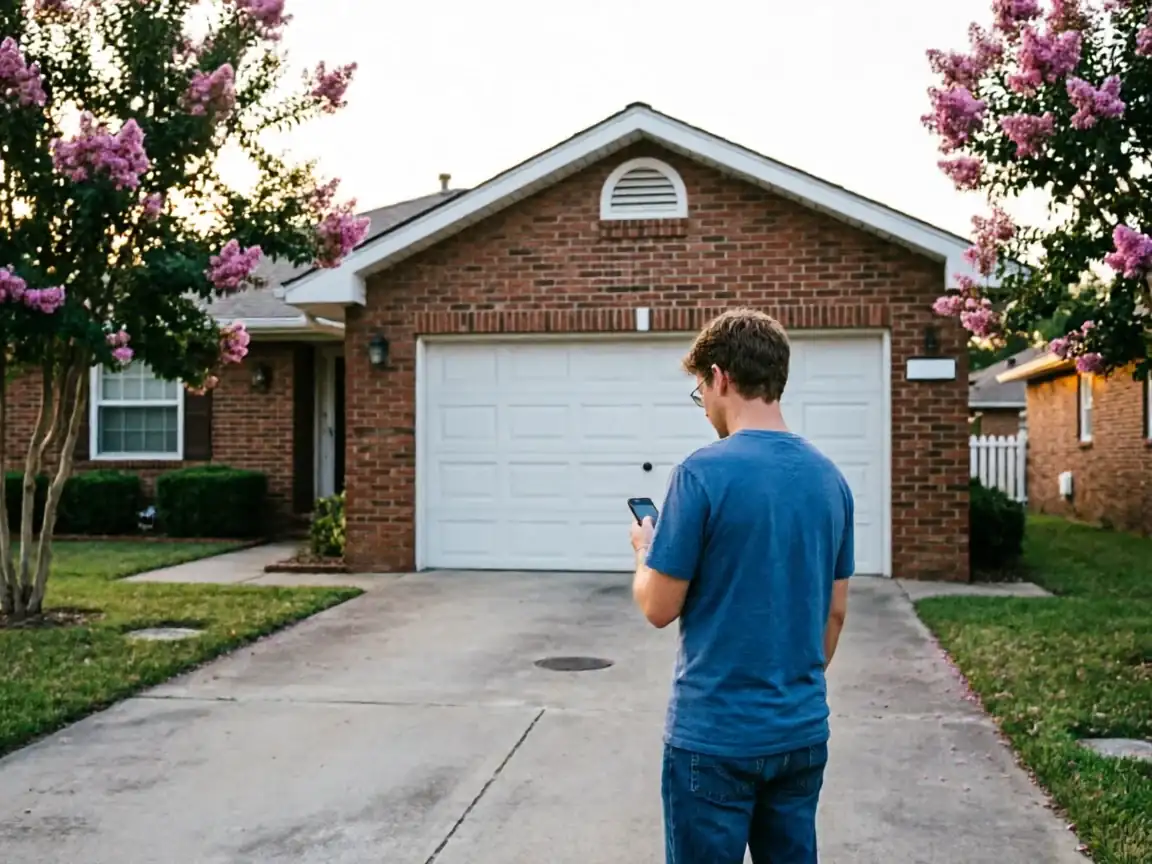
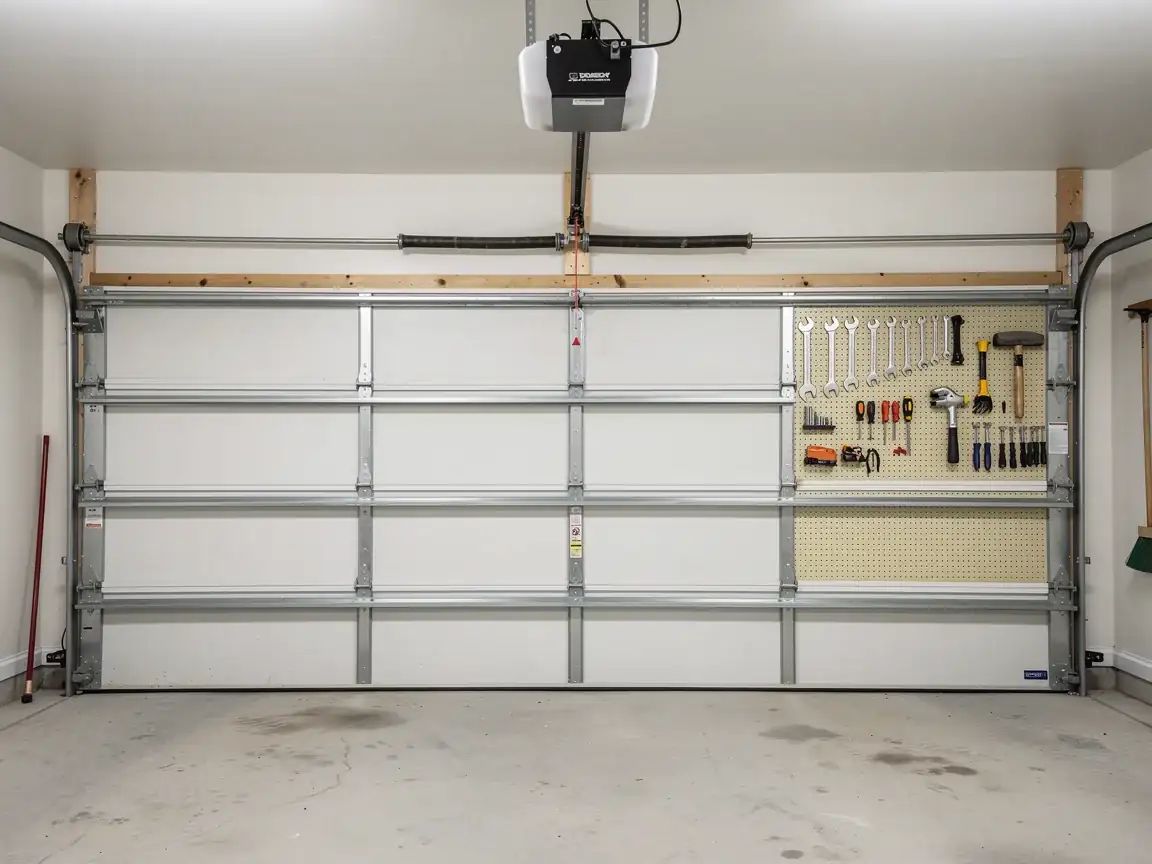
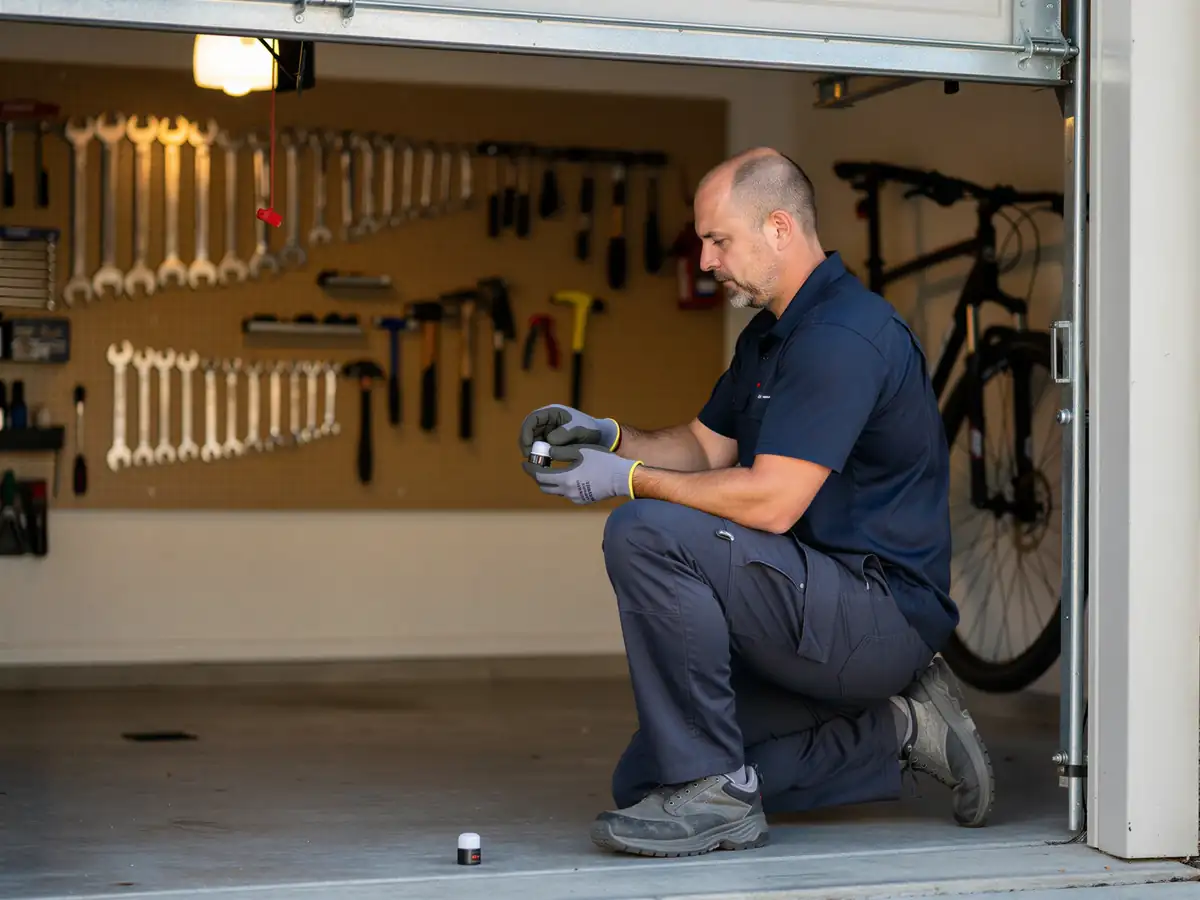
That difference sounds small, but it puts a lot of Belton garages in the same window: original builder-grade chain-drive openers installed when the house went up, now pushing close to thirty years old. The motor usually isn't the first thing to fail. It's the drive gear stripping, the logic board losing its memory of the remote codes, or the safety sensors drifting out of alignment after decades of settling.
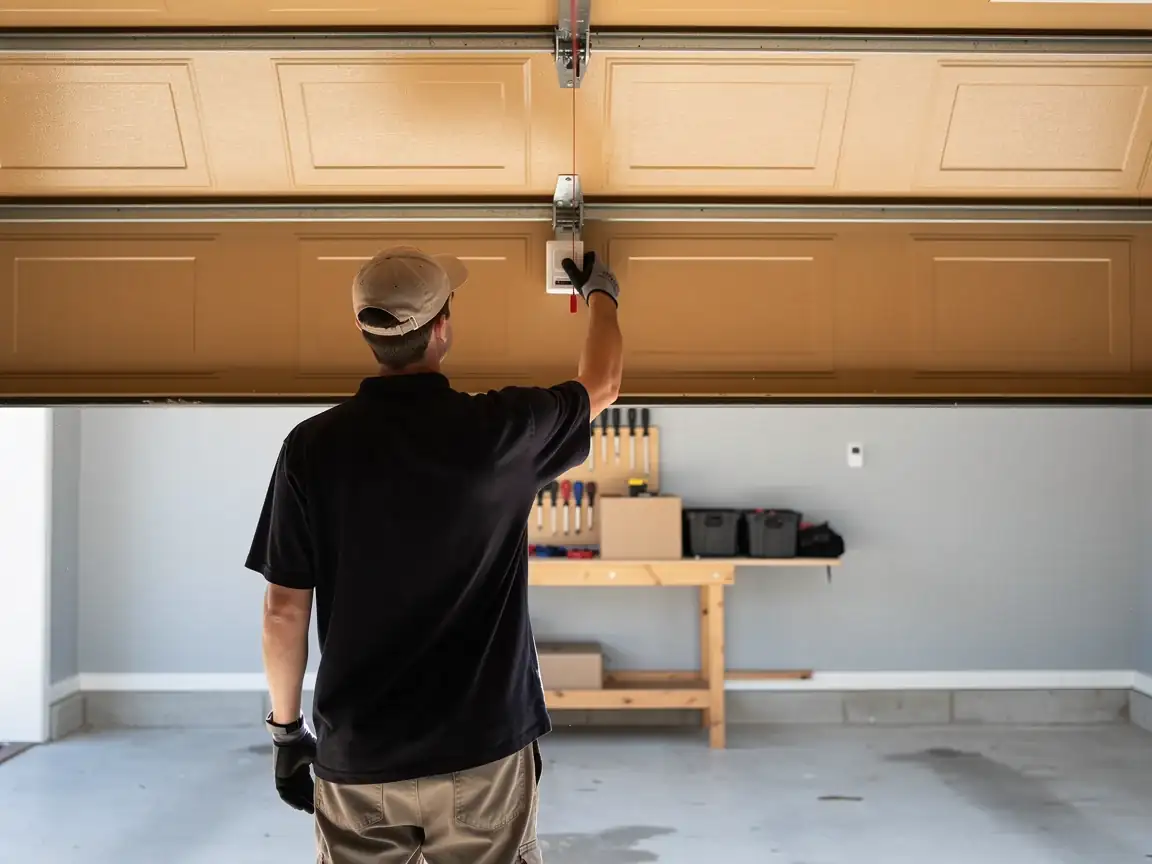
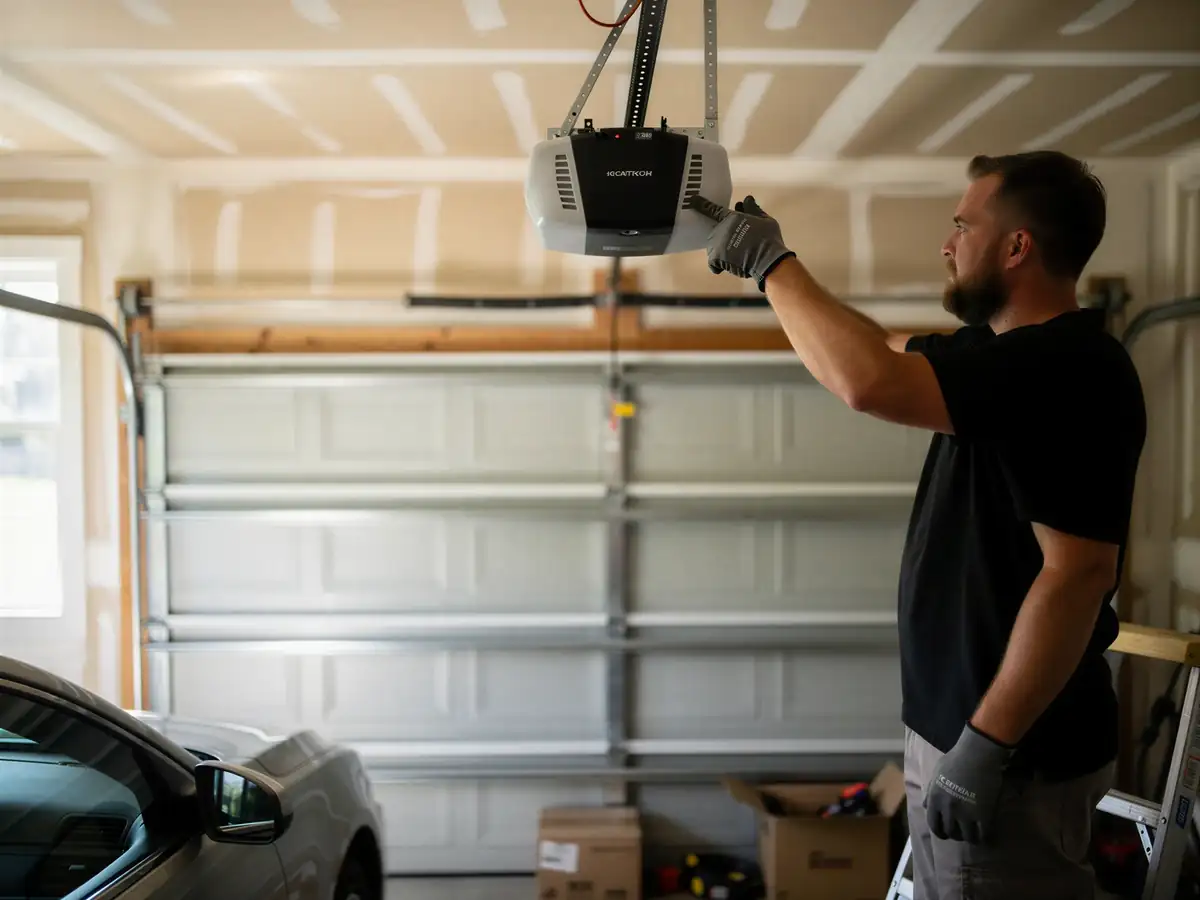
Installing a new opener on a mid-90s door means checking the existing track and rail mount before anything else
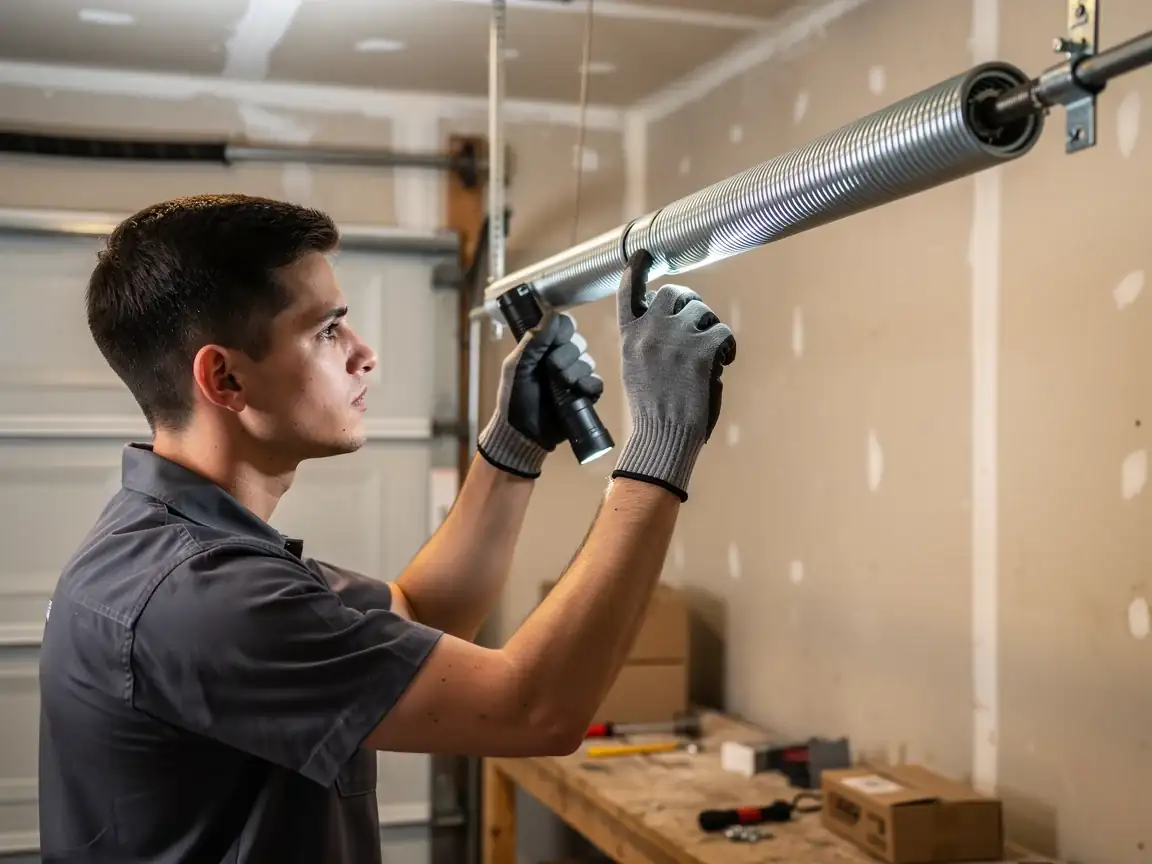
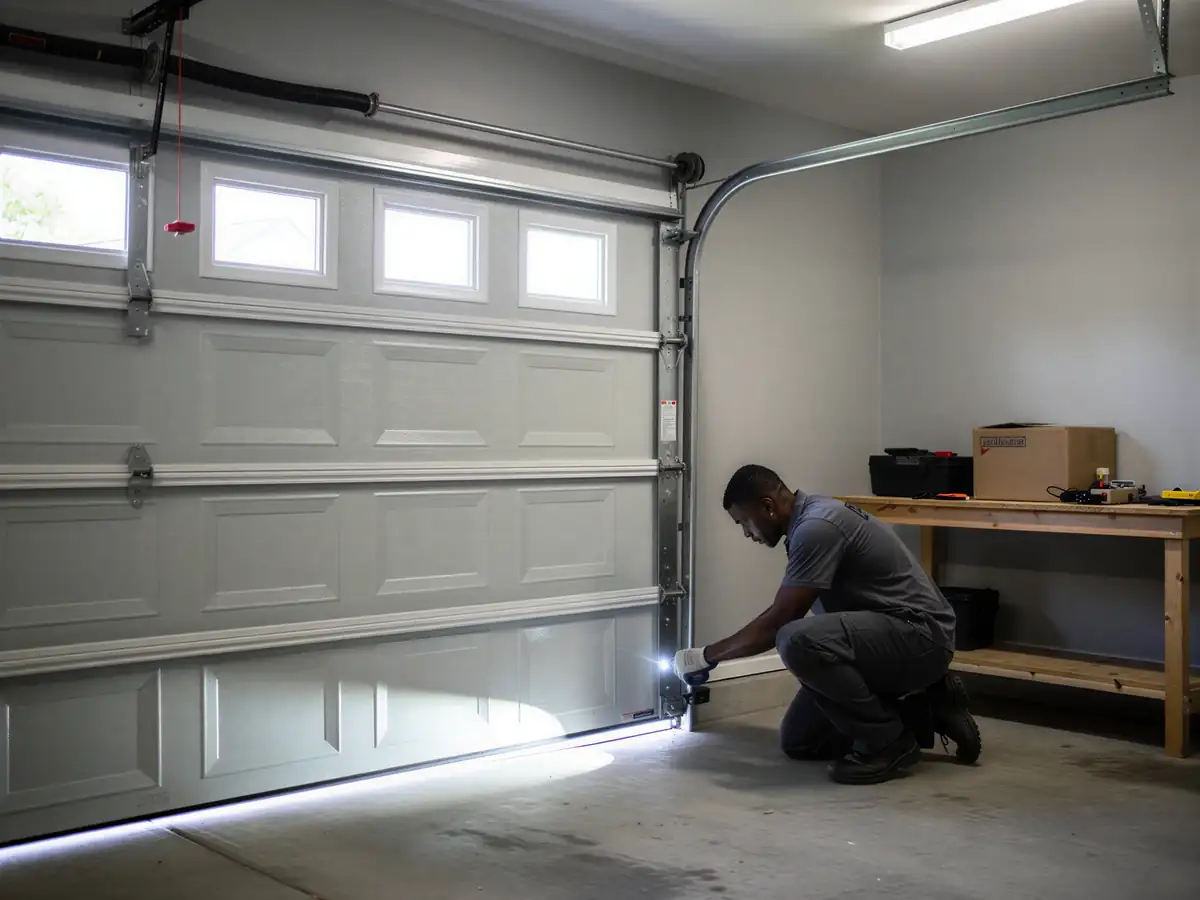
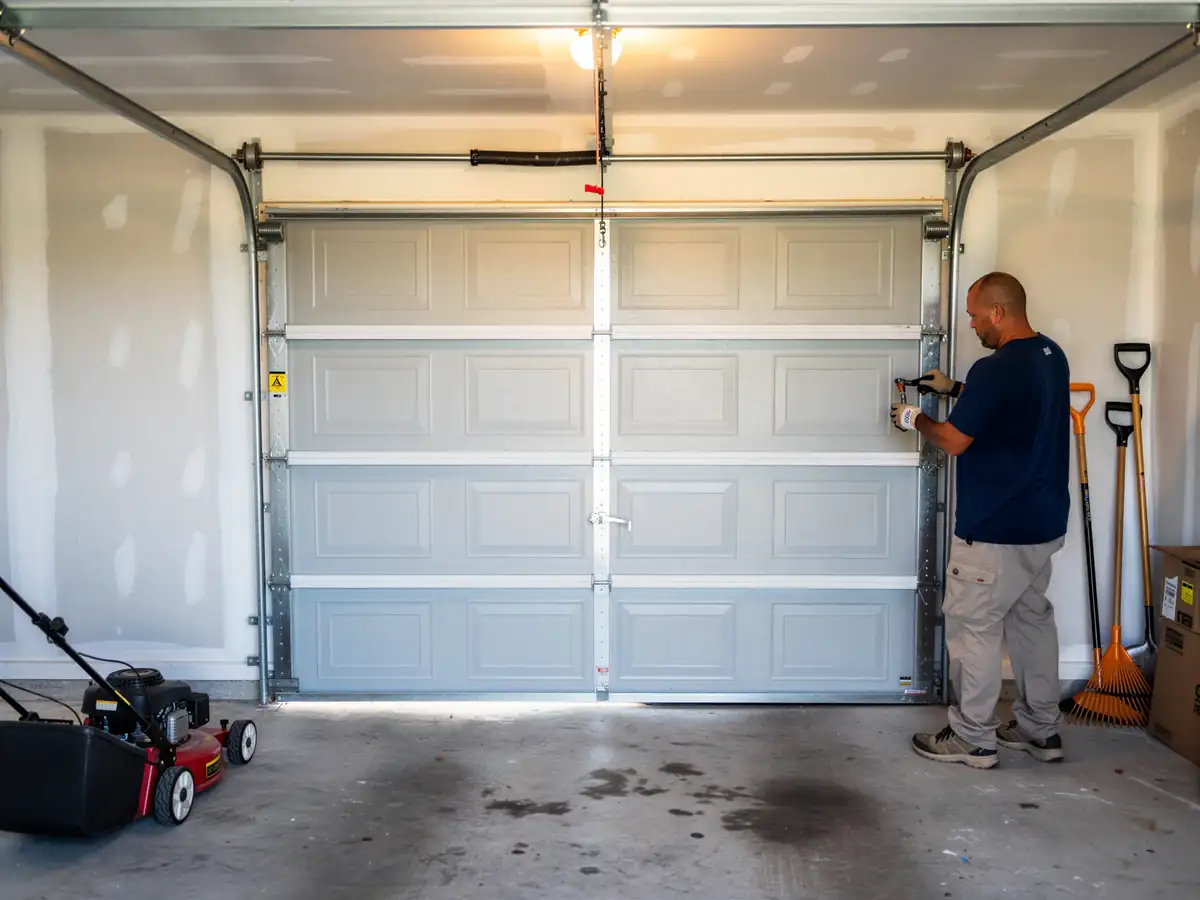
Builders in that era used a mix of bracket styles, and the header above the door may need reinforcement to carry a heavier modern unit. We don't just unbolt the old motor and bolt on a new one. We check the door's weight and balance first, because an opener fighting a door that's out of spring tension will burn itself out again inside a couple of years, and that's a call-back nobody wants.
Parts We Carry
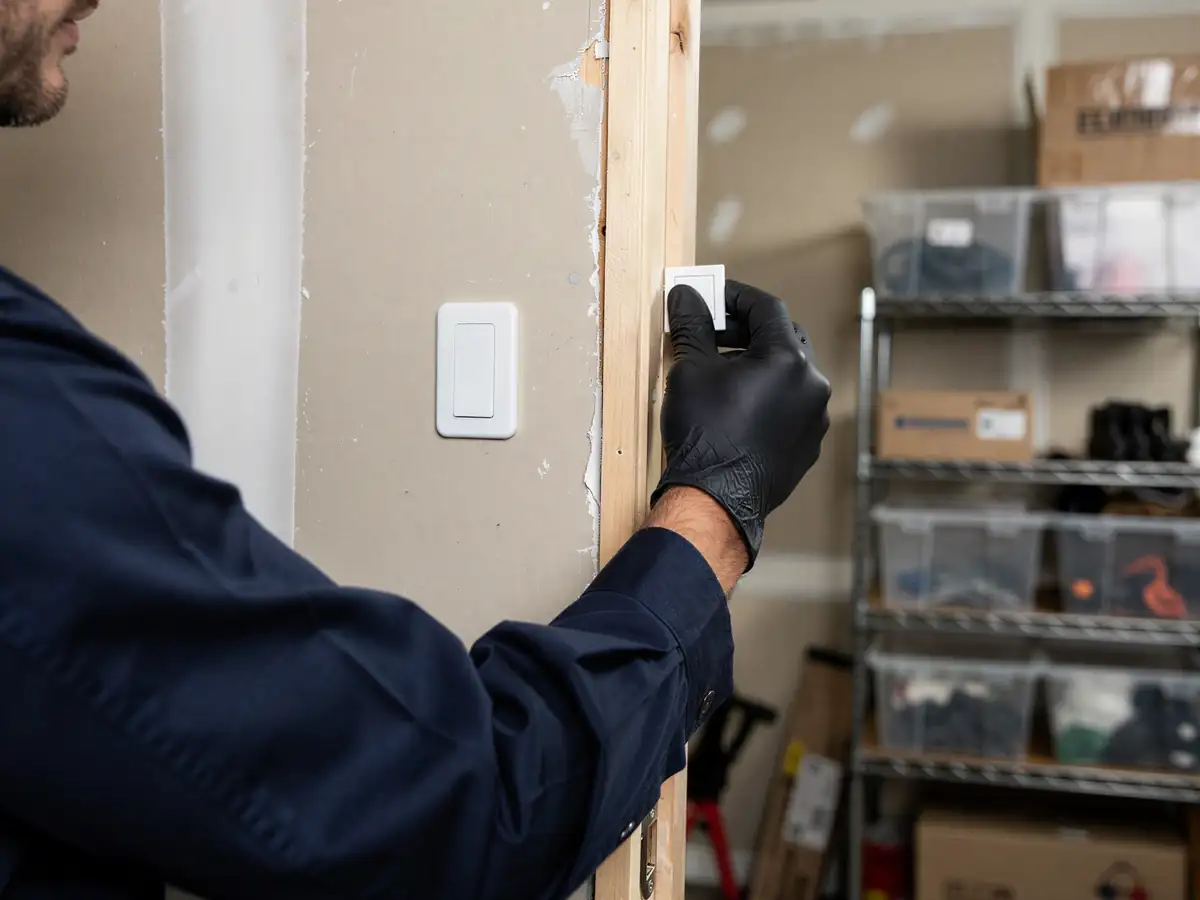
We carry belt-drive and chain-drive openers, plus the circuit boards, safety sensor pairs, and wall console units that fail most often on doors from this build era. Battery backup units are worth asking about too - the kind of unit that keeps the door operable during a power outage, which matters if Belton loses power during a freeze event here and there under this region's mild-with-occasional-freeze climate.
One limit worth being upfront about: if your garage was built with a non-standard rail length or a low-headroom setup common in some 1990s tract construction, we may need to order a specific rail kit rather than install off the truck. That adds a day or two, not a same-day job, and we'd rather tell you that before the appointment than after we've opened the box.
Getting It Booked In
We run this job out of Temple, about six miles up the road from Belton, so scheduling works the same as any other call in that stretch - no separate branch, no local depot, just a truck making the short run out. When you call, tell us the age of the house if you know it and whether the opener still runs at all or has stopped completely. That one detail changes which unit we bring: a dead opener on a 1990s door usually needs the full kit, while one that runs rough but still lifts the door might just need a board or sensor swap.
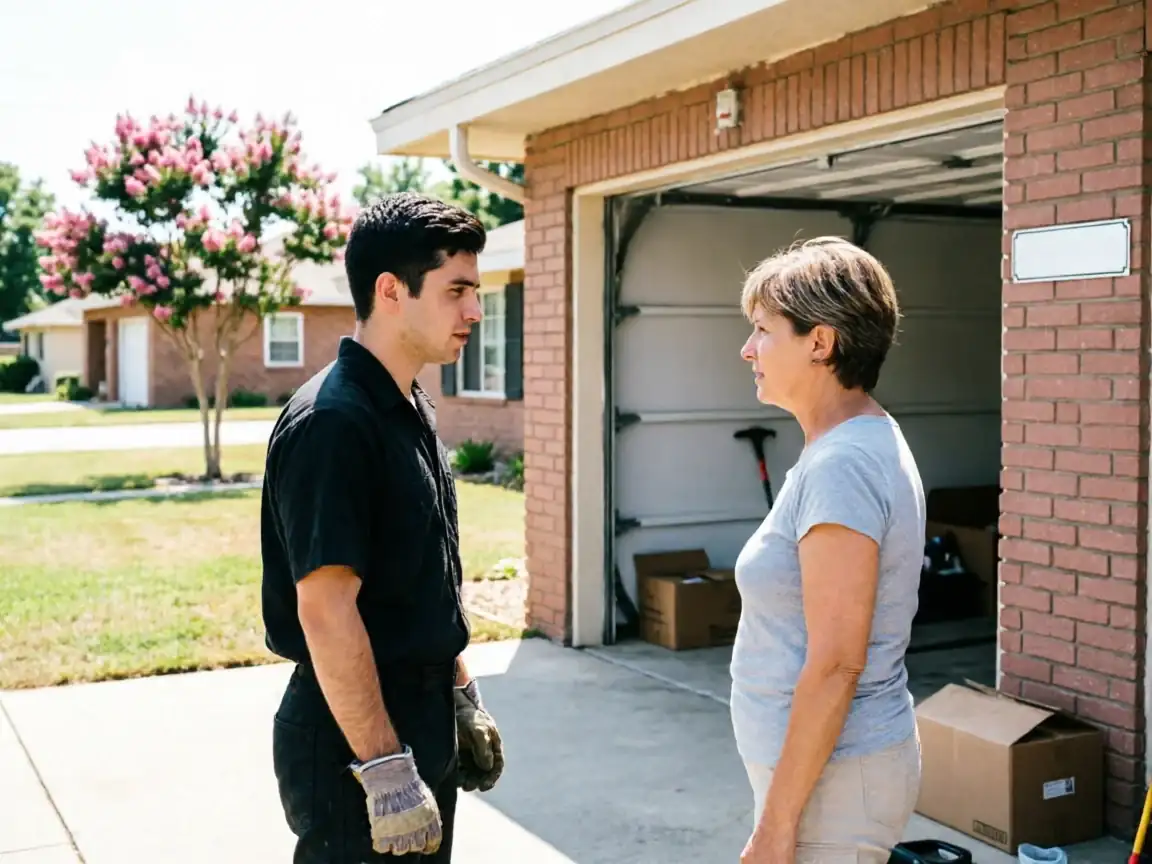
If you're not sure what's wrong, that's fine - plenty of Belton calls start that way. We'd rather look at the door in person than guess over the phone and show up with the wrong part.
How Long It Takes
A straight opener swap on a standard mid-90s Belton garage
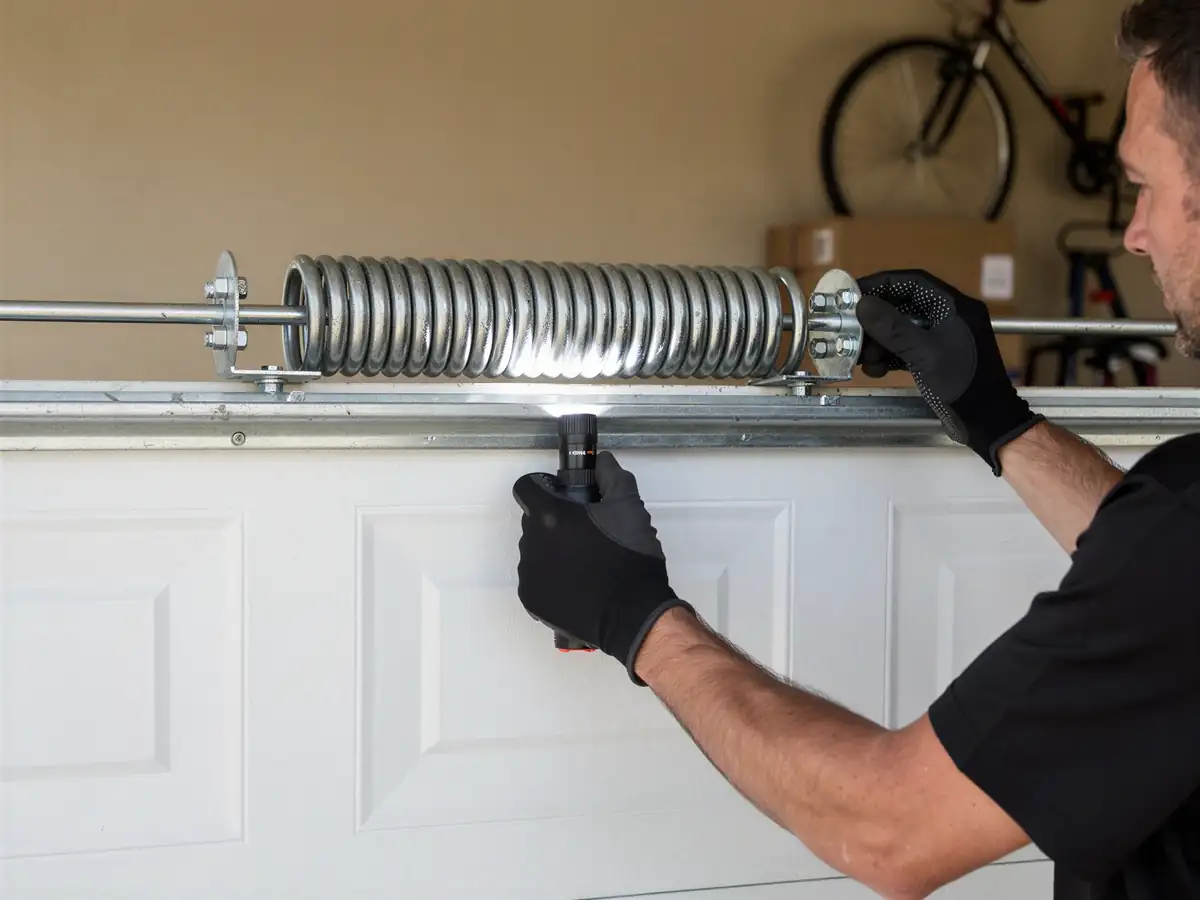
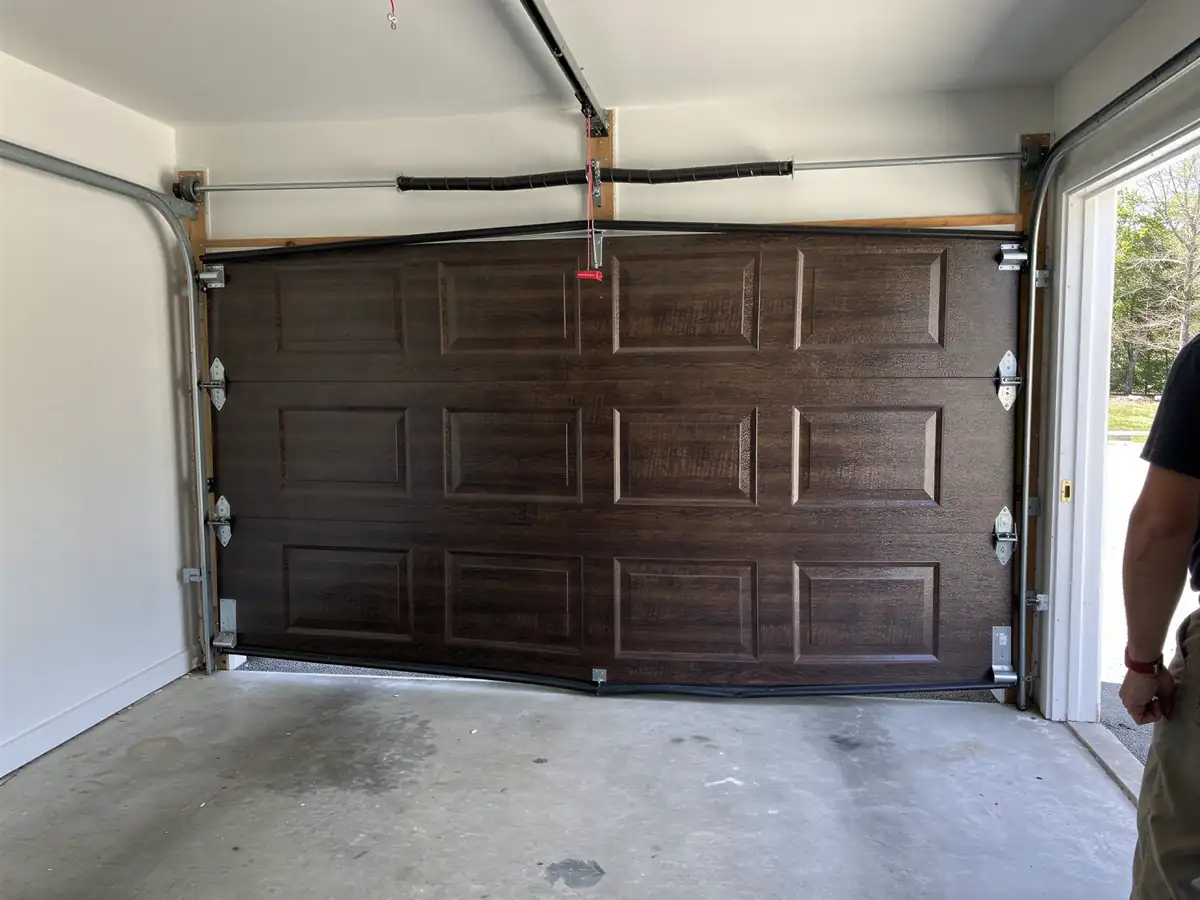
No header modification and no rail substitution, is usually a half-day job. Where it runs longer is when the original bracket doesn't match current mounting hardware, or when the door itself needs balance work before the new opener goes in - something more common in houses built before torsion spring sizing was standardized the way it is now.
If you're deciding between repair and replacement
The age of the opener is the deciding factor more often than the symptom. A board from this build era that's failed once tends to fail again within a year or two, even after a patch repair. We'll tell you straight if we think a new unit is the better spend than another repair on the old one.