The Complications
Start with the money, because it decides more than people think
Troy's median household income is $81,193, well above the $73,750 median across the rest of our service area. That gap matters on a repair call: when a torsion spring snaps on a door that's already fifteen years into a twenty-year opener, the math on replacing the whole unit instead of patching it pencils out sooner for a Troy household than it does elsewhere nearby. We see that line move depending on the street, but income is the biggest lever.
The second complication is the housing itself
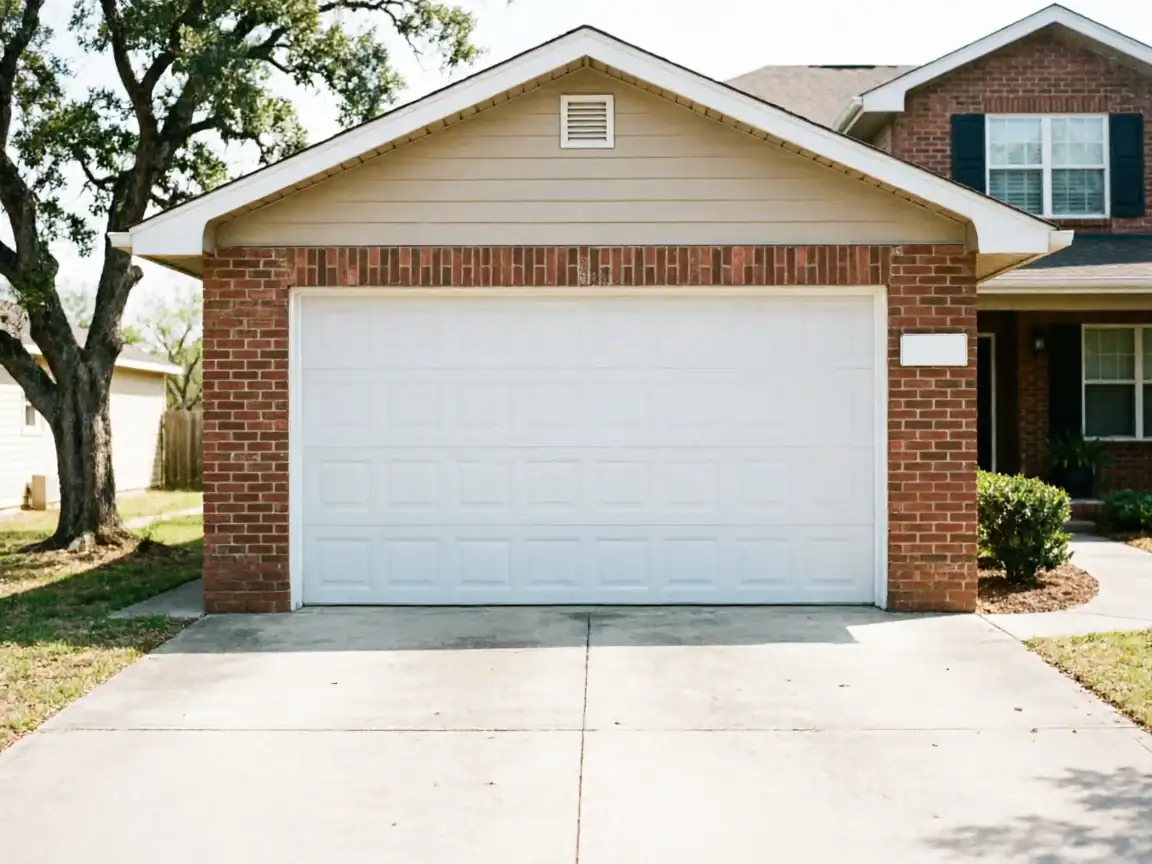
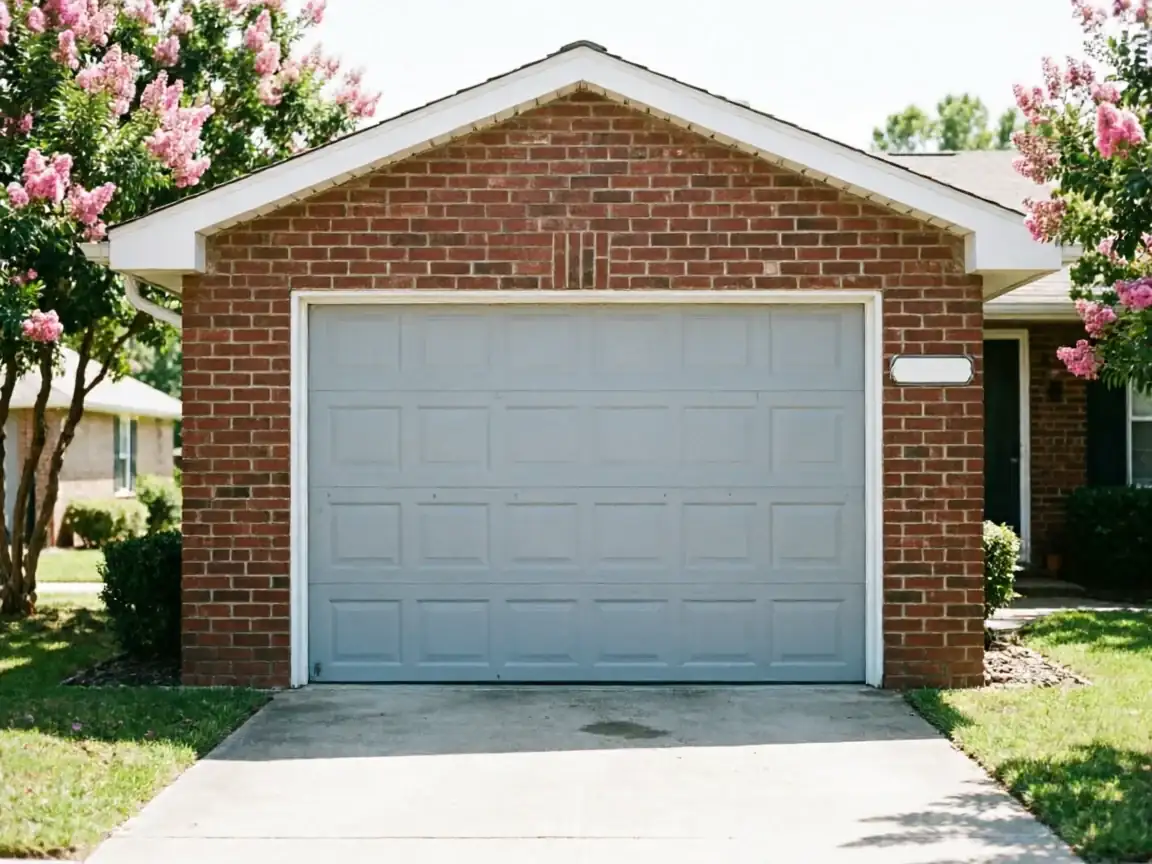
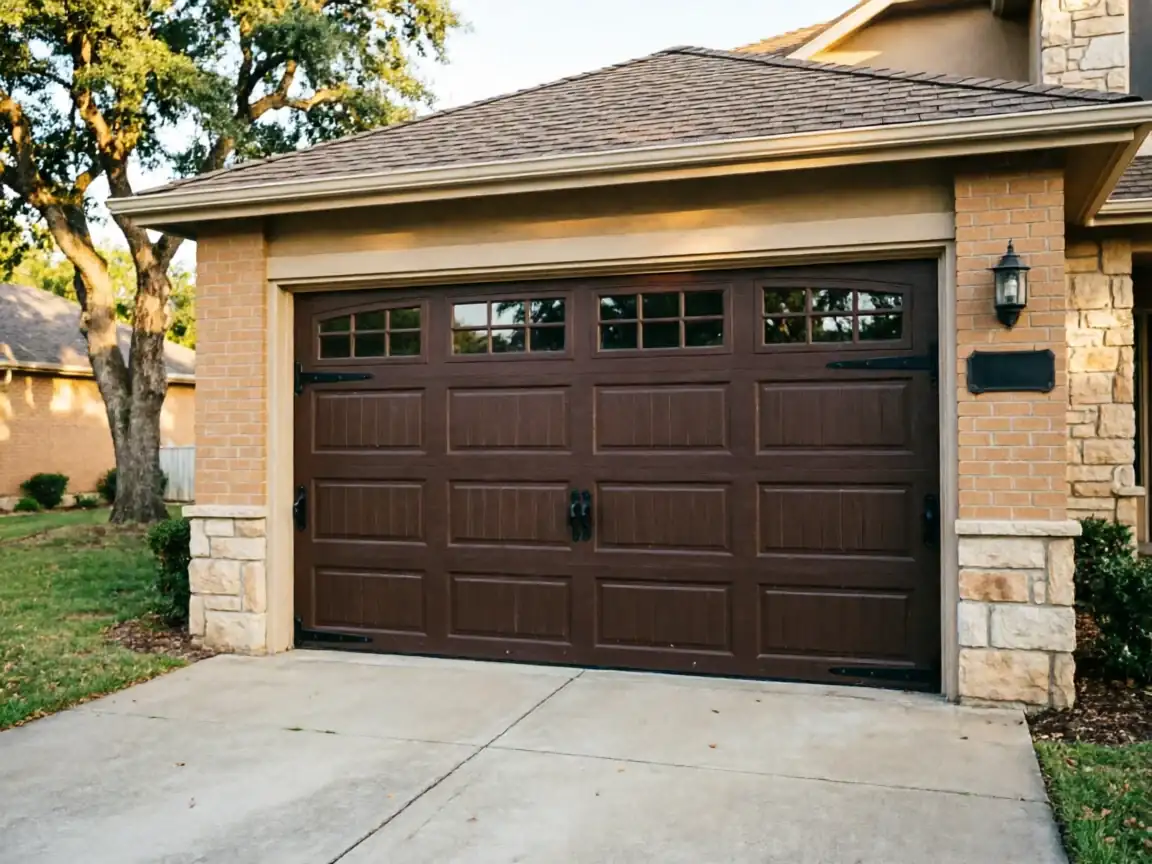
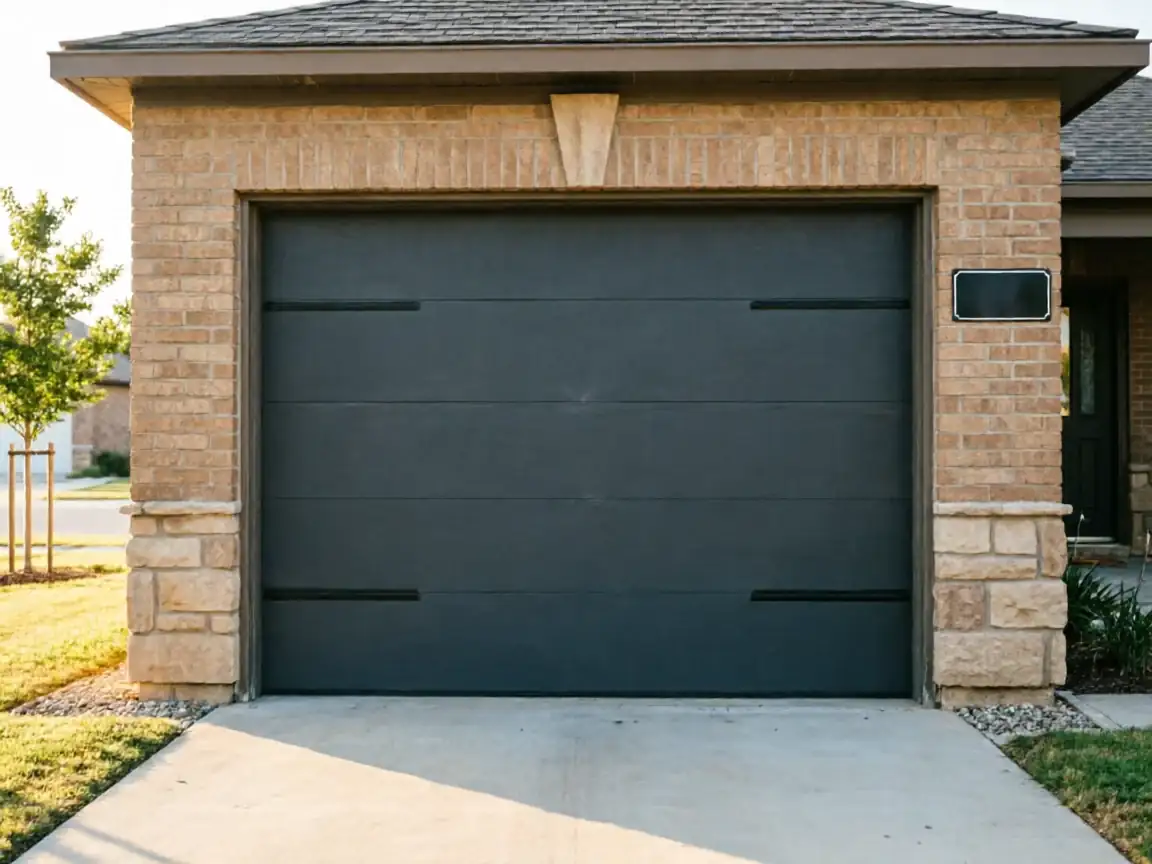
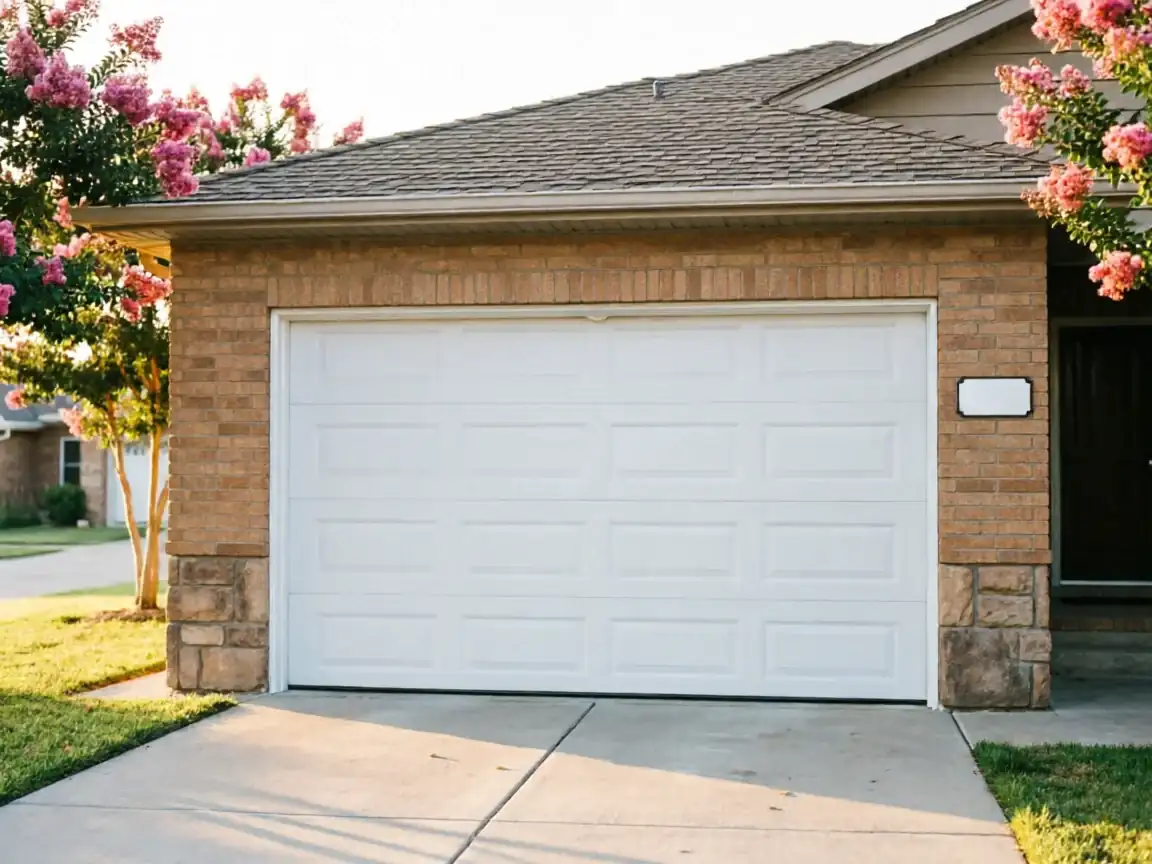
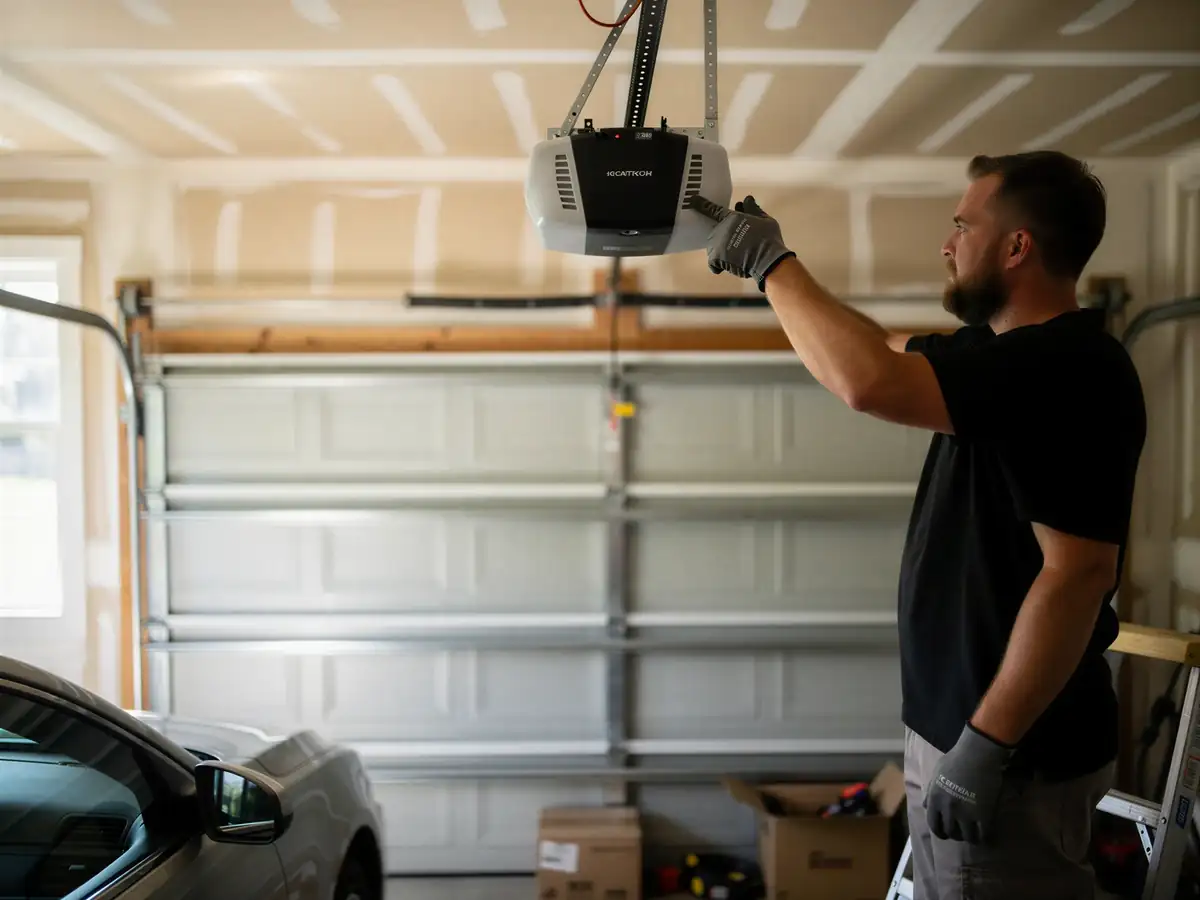
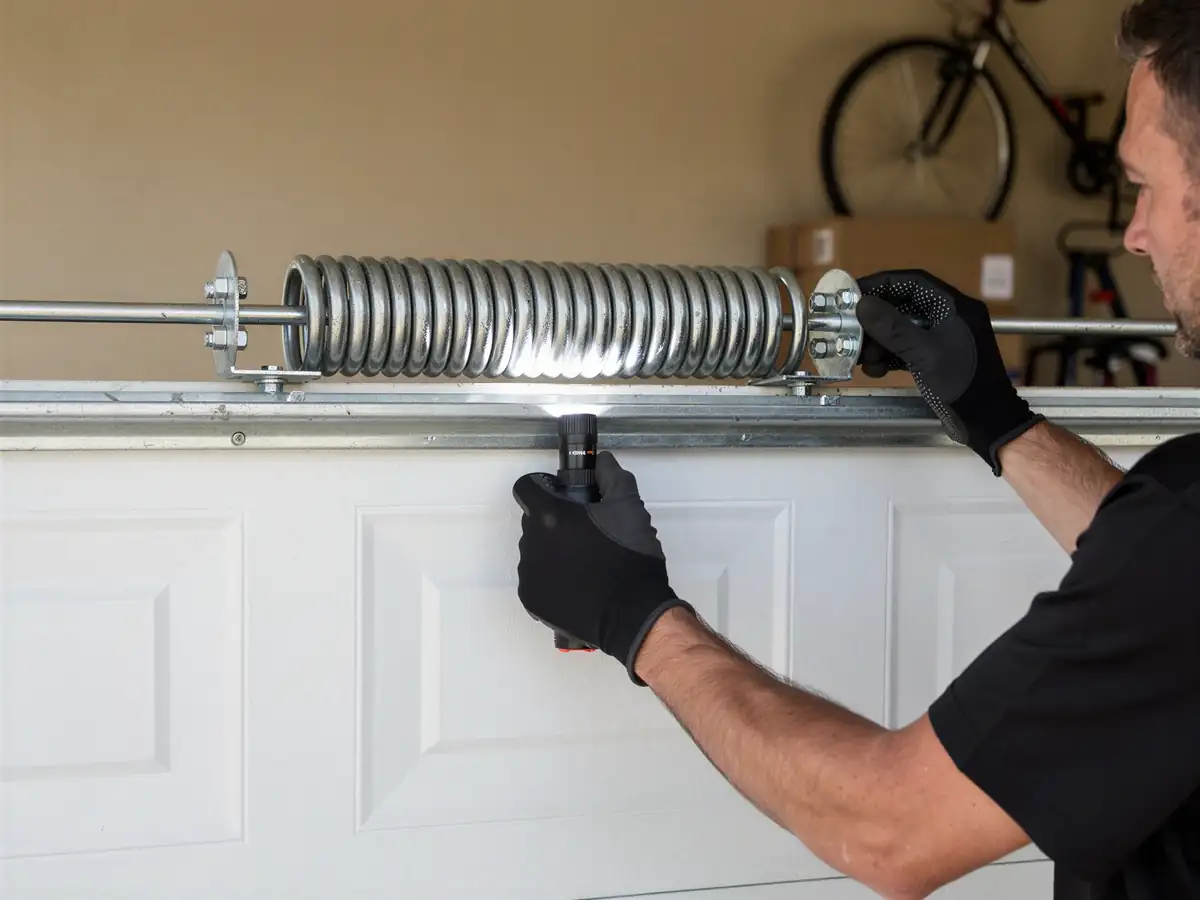
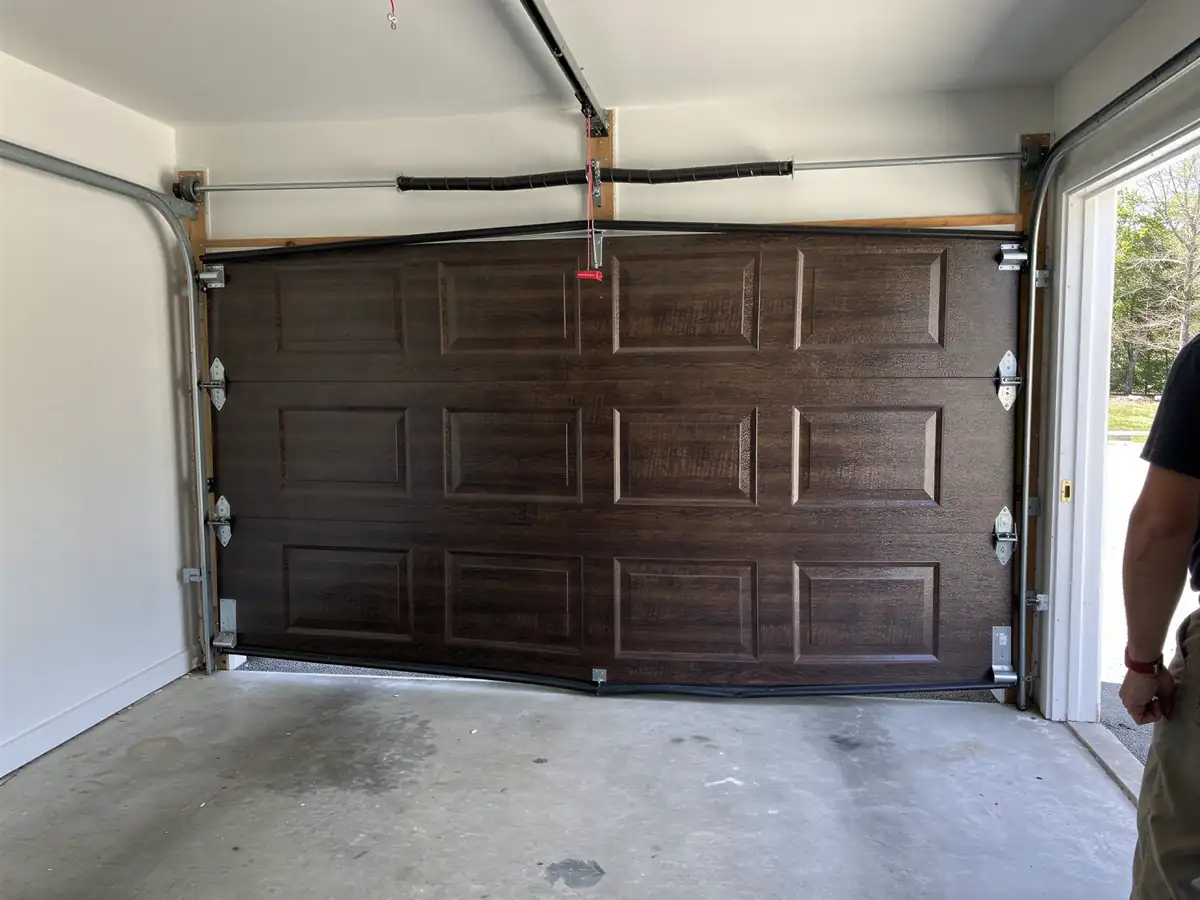
The typical Troy house went up around 1994, which puts it in the heart of the 1980s-and-90s wave that makes up most of the stock across the eleven areas we cover from Temple. That means steel sectional doors, extension or torsion springs depending on when the builder cut corners, and chain-drive or early screw-drive openers - not the one-piece slab doors you'd find on an older block. The failures that show up are predictable: worn rollers, a stretched extension spring on a door that was never upgraded to torsion, and openers whose circuit boards are past the point of a $40 part fix.
Getting It Booked In
We run this job out of the Temple shop, about 8 miles from Troy. That's close enough that a spring job or opener swap doesn't turn into a half-day wait once we're on the road, but we're not going to tell you we have a crew sitting in Troy waiting for the phone to ring - we don't, and any garage door company that claims a depot in every small town nearby isn't being straight with you.
When you call, tell us the door size, whether it's one spring or two, and roughly how old the opener is if you know it. For a 1990s-built house that's usually enough to guess the parts before the truck even leaves Temple, which cuts down on a second trip. If the job turns out to need something we didn't expect - a odd-width door, a discontinued opener board - we'll say so on site rather than guessing and coming back twice.
Parts We Carry
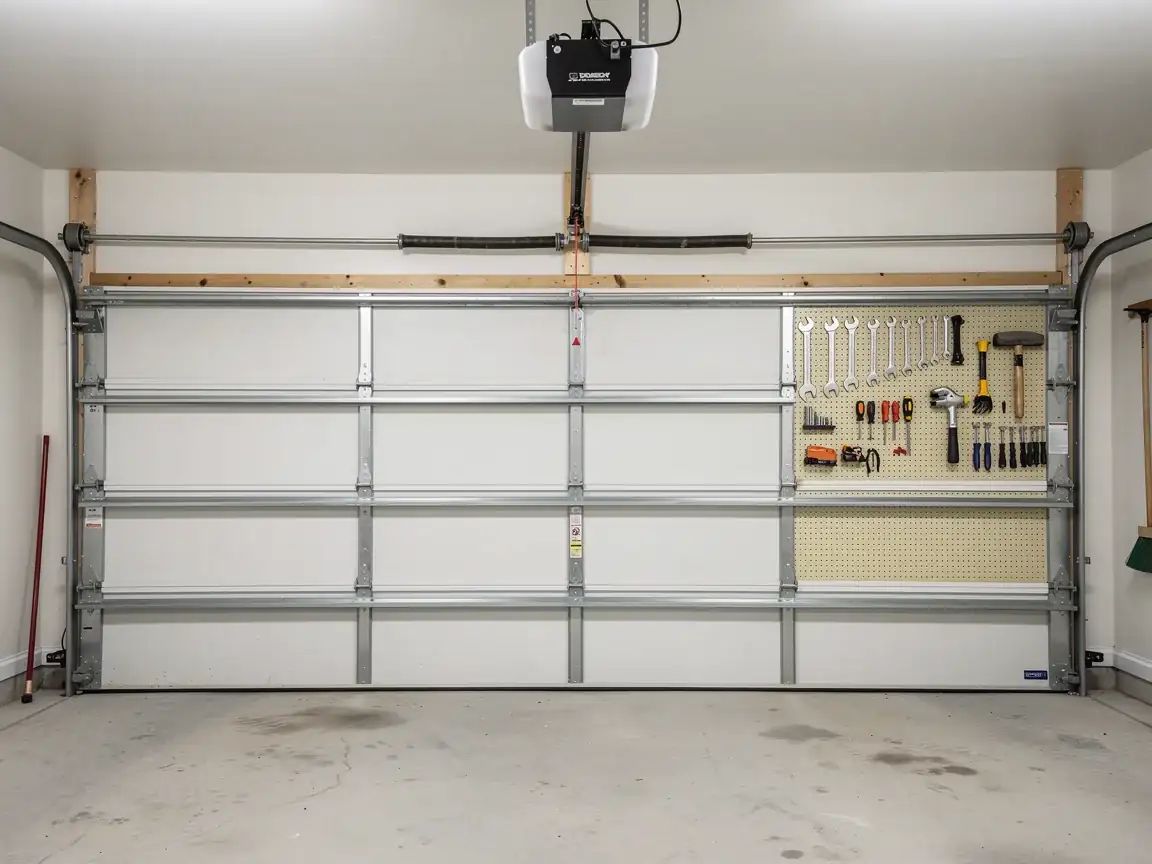
For a town built mostly in the 1990s, the common failures are consistent, so the parts list is short and predictable: torsion springs in the sizes that fit steel sectional doors from that era, extension springs for the houses that never got upgraded, nylon and steel rollers, lift cables, and opener logic boards for chain and screw-drive units from the period. We carry what covers that stretch of housing stock on the truck most days.
What we don't keep on hand is anything for a door style outside that window - a one-piece door from an older build, or a high-end insulated panel system installed recently. Those get special-ordered, and the honest answer is that can take longer than the repair itself. If your door is one of those outliers, we'll tell you the lead time before you commit to the job, not after.
Why This Fails Locally
Our climate band here is mild with occasional freeze
Not the deep-freeze cycling that cracks steel panels or the heavy humidity that rots wood jambs. What that means in Troy is less about the door skin and more about lubrication and spring tension drifting over a few decades of temperature swings. A torsion spring wound correctly in 1994 has usually lost some tension by now, and on a mild-freeze cycle that shows up as a door that's heavier to lift by hand than it should be, rather than a dramatic snap.
The other local factor is household count
Troy has 921 households, a small enough number that this isn't a town where a garage door shop can justify stocking a deep local parts cache - which is exactly why we run it from Temple and bring the truck loaded for the housing era we know is here.
- 921 households
Doing It Yourself
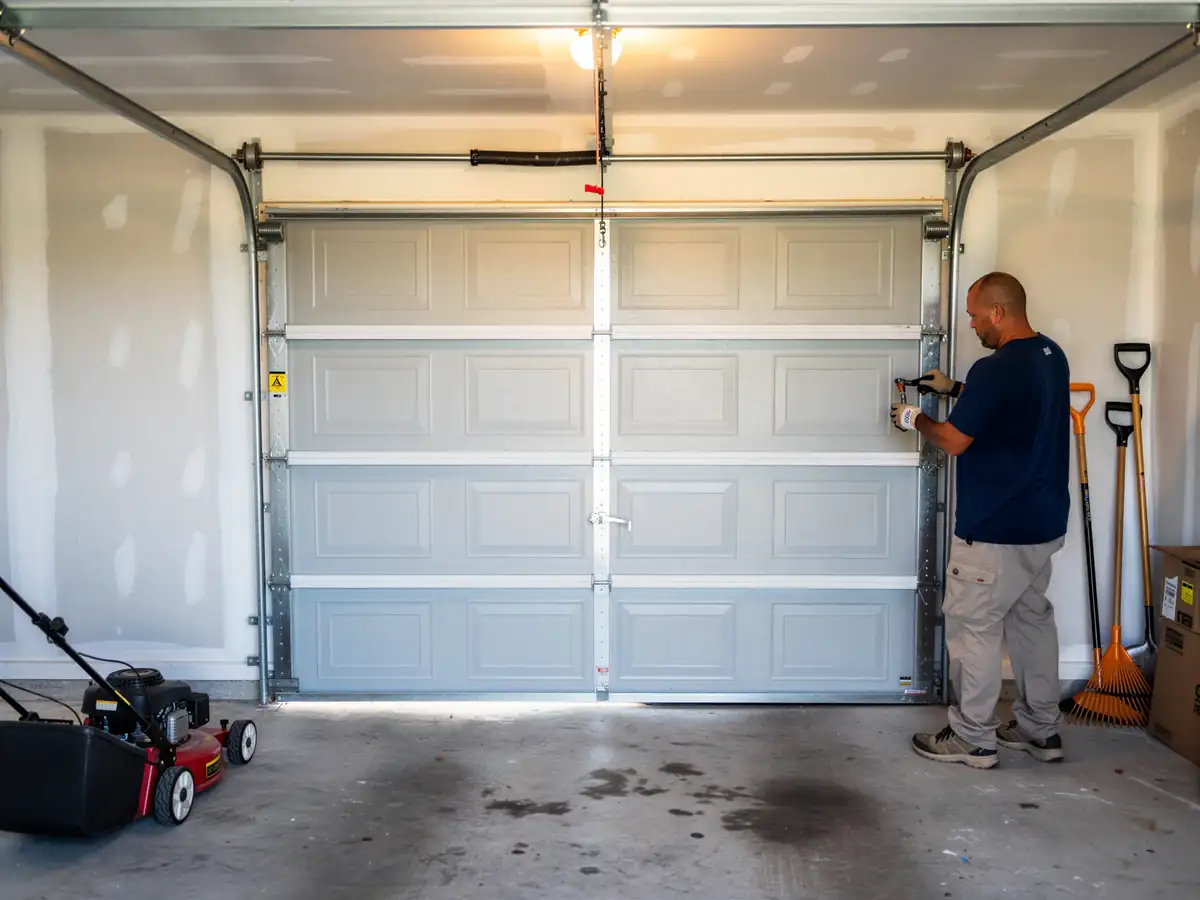
Some of this is reasonable to handle yourself. Lubricating rollers and hinges, replacing a worn weatherstrip, or resetting opener travel limits on a 1990s chain-drive unit are all things a homeowner can do with basic tools and an afternoon.
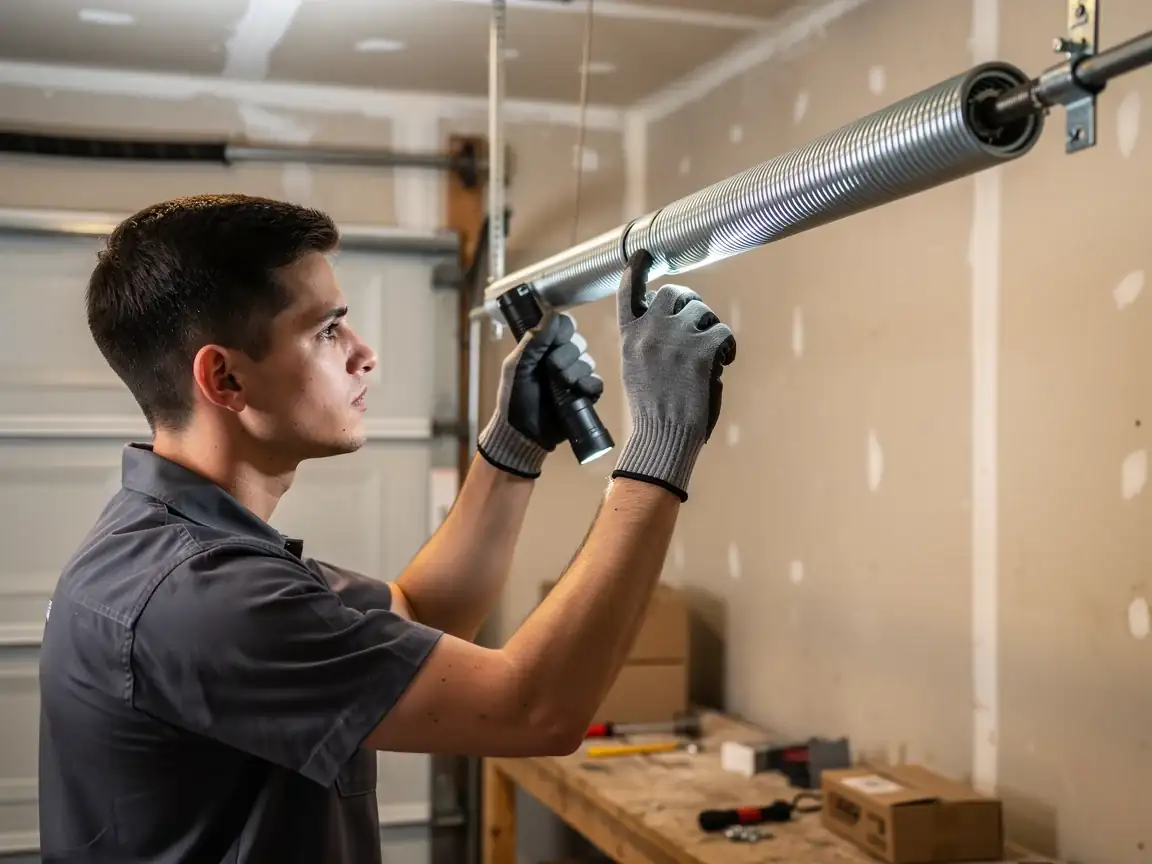
What we'd tell you not to touch is the torsion spring itself. A spring sized for a door built in the early-to-mid 1990s is still under enough tension to break a wrist or worse if the winding bars slip, and the cost of a hospital visit erases any savings from skipping the call. If you're not sure whether what you're looking at is a spring job or something simpler, a photo of the broken part and the door's age is usually enough for us to tell you over the phone before you decide to open the panel yourself.