Getting It Booked In
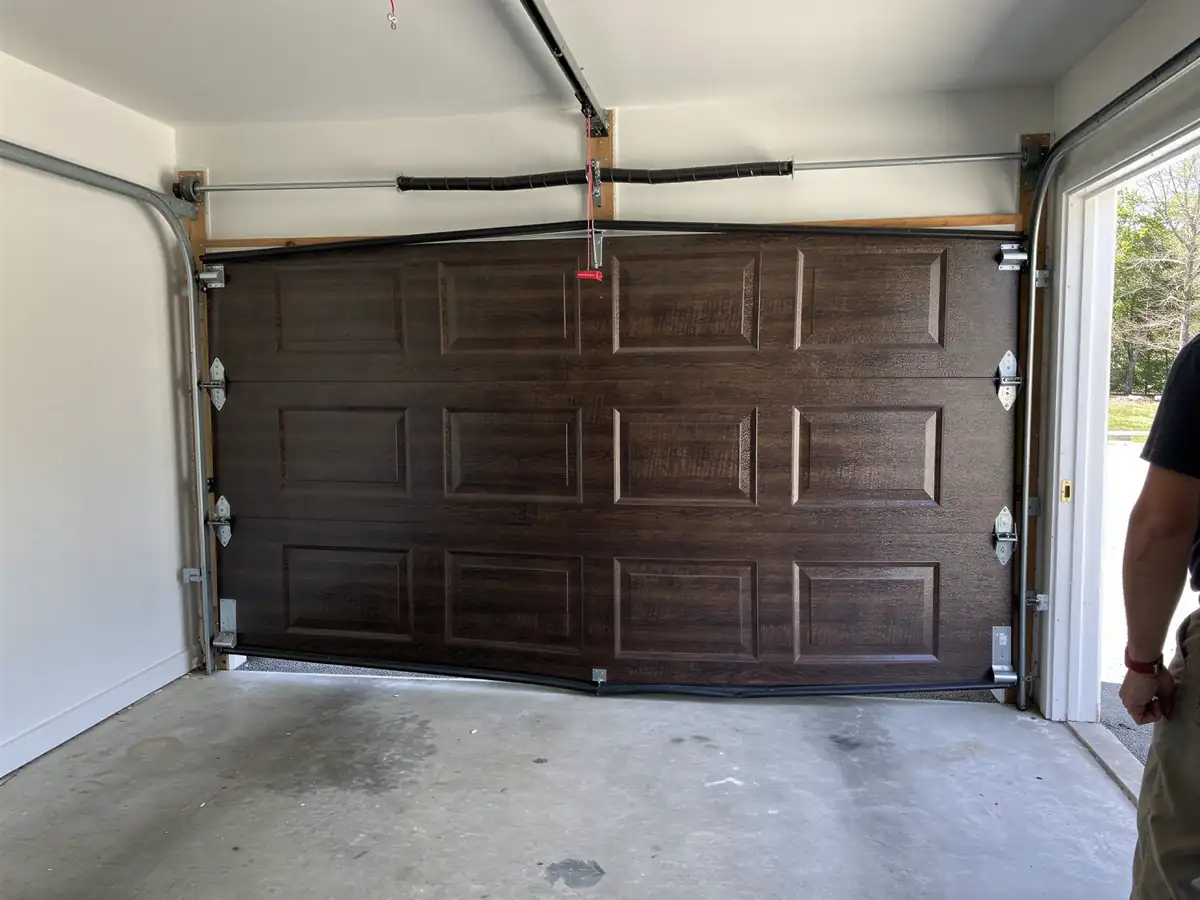
We run out of Temple, about 8 miles from Troy, so there's no local branch to swing by - a call gets a truck routed out, not a same-hour walk-in. Tell us the door's behavior on the phone: does it bind on one side, does the opener strain and reverse, does the bottom panel visibly lean. That lets the tech load the right track sections and roller hardware before leaving Temple instead of guessing and making a second trip. Given how many Troy doors share that same early-90s steel-sectional build, we usually have a good idea what's wrong before the truck's in the driveway.
Parts We Carry
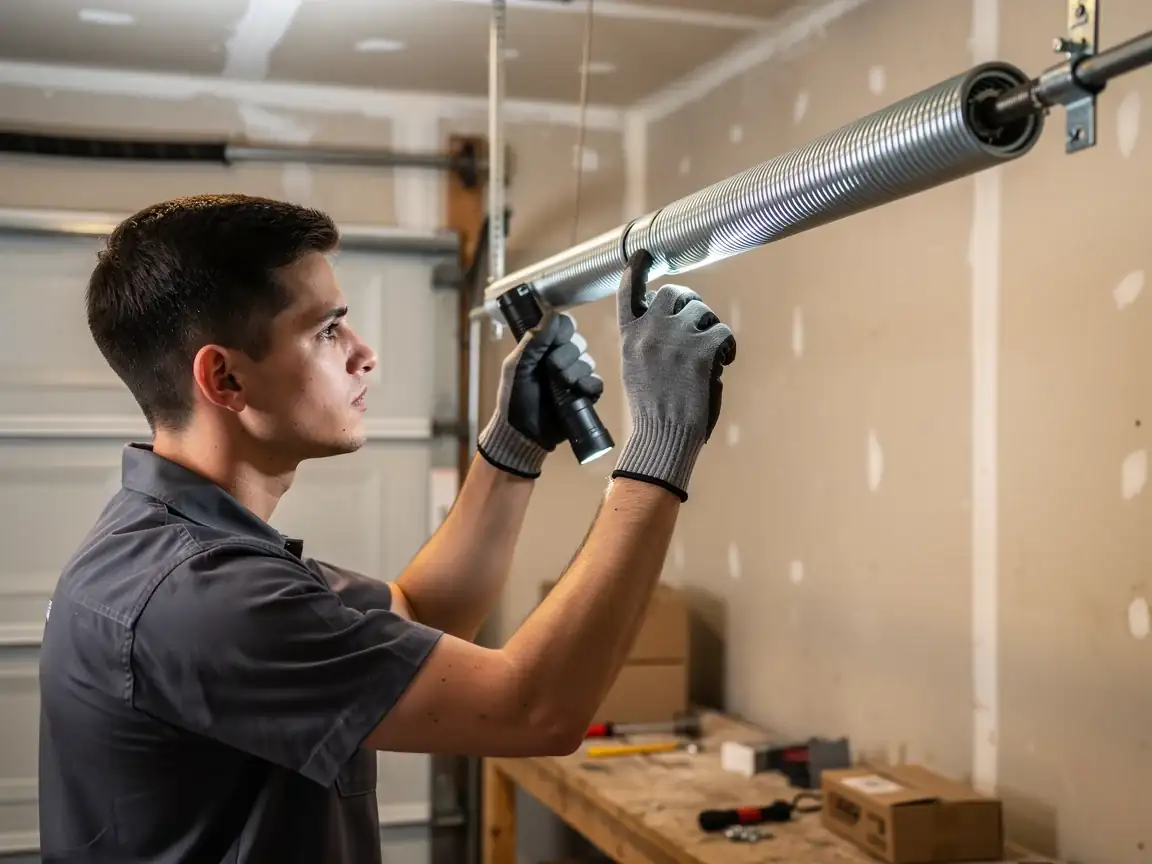
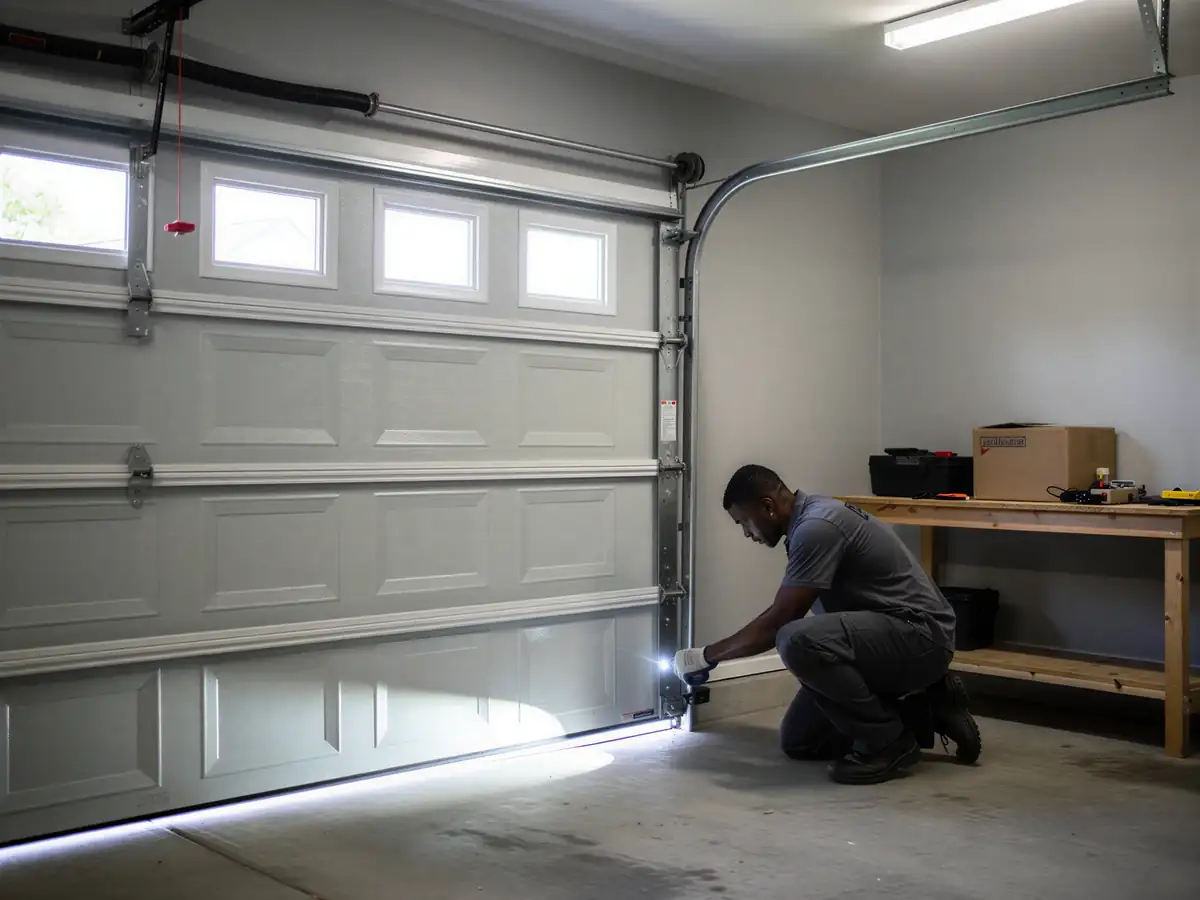
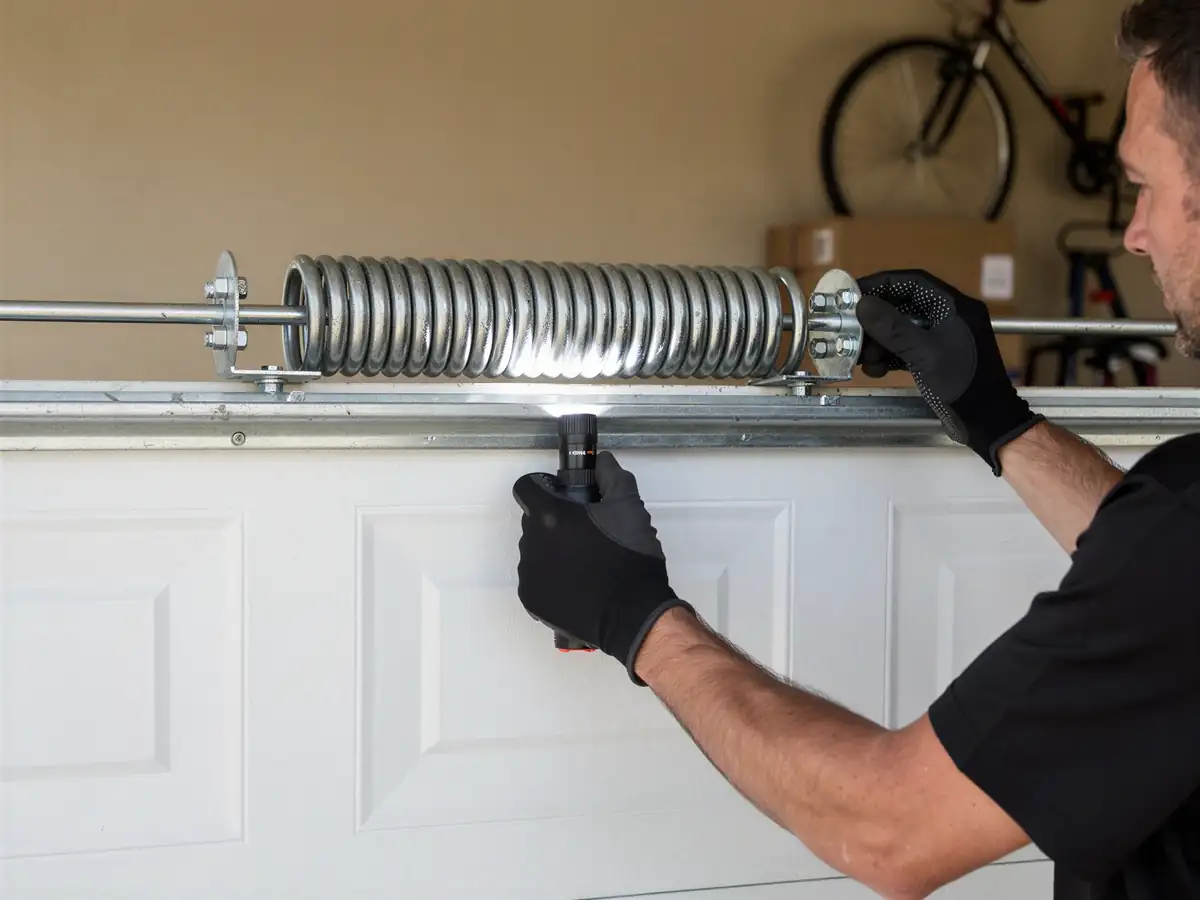
For a door built in that 1994 window, the common failure parts are 2-inch galvanized track sections, nylon or steel rollers with 7-inch stems, and the bent-steel jamb brackets that anchor the track to the framing. We also stock standard torsion springs sized for a 16x7 steel door, since a sagging spring is often what let the door run off-balance long enough for a roller to walk off the track in the first place. What we don't carry on the truck is replacement steel skin for dented panels - if a panel's bent badly enough that the track pull is a cosmetic problem as much as a mechanical one, that's an order part, not a same-visit fix.
Doing It Yourself
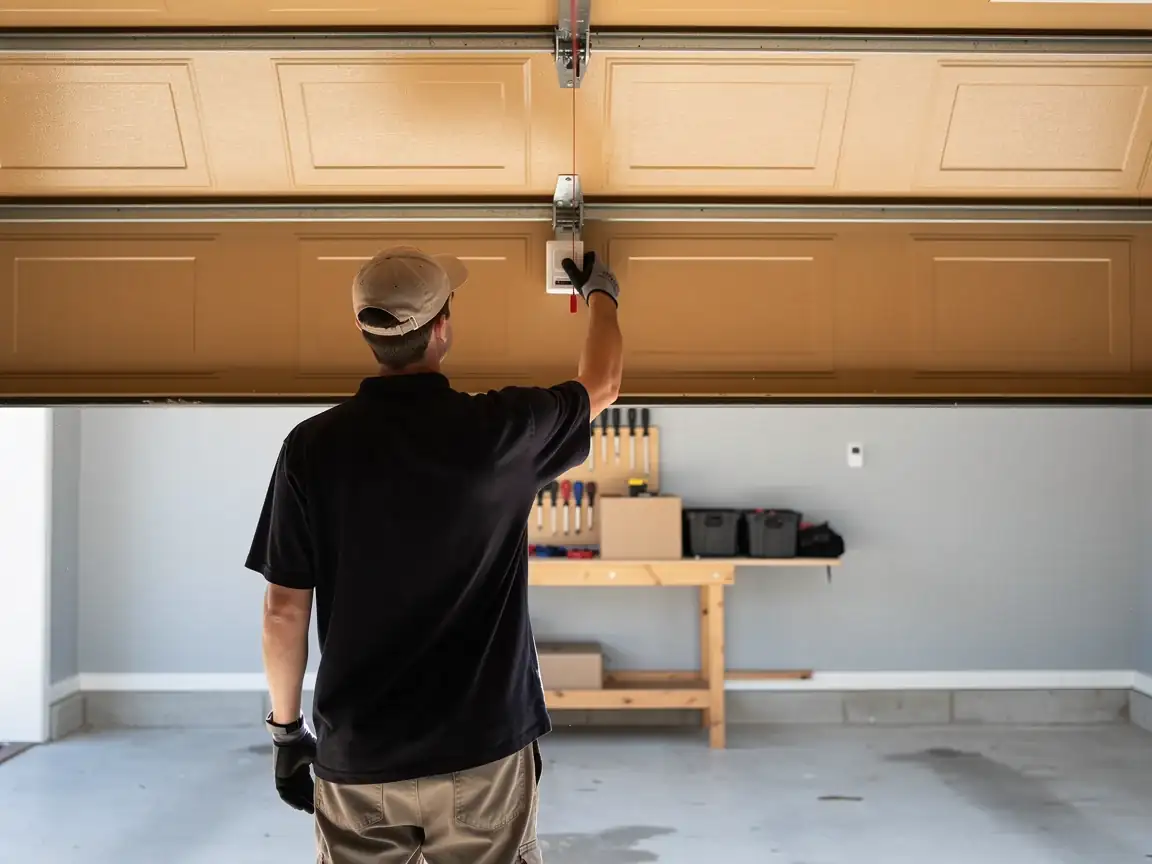
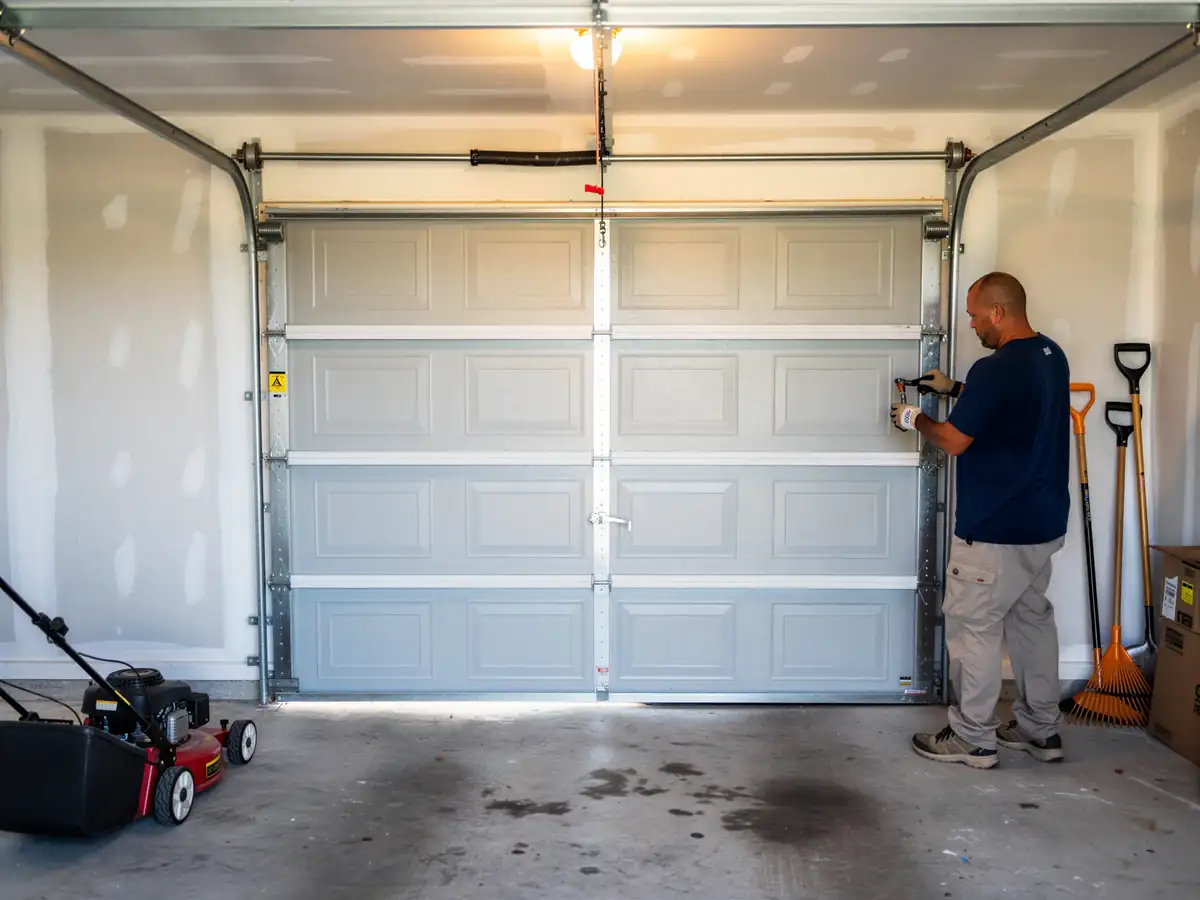
If the door's only off by a little - rolling crooked but still in the track on one side - you can sometimes walk it back by loosening the bracket bolts, squaring the panel by hand, and retightening. If a roller's fully out of the track or a cable has come off a drum, stop. A steel door this size under spring tension will not forgive a mistake, and a torsion spring on a double door holds enough force to break bones. That's not a DIY call, and it's not one we'd talk you through over the phone either.